Journal · 2026-11-15
One Thousand Meters Beneath the Hammer Headframe in the Karviná Region
Backfilling the ČSA 2 Shaft
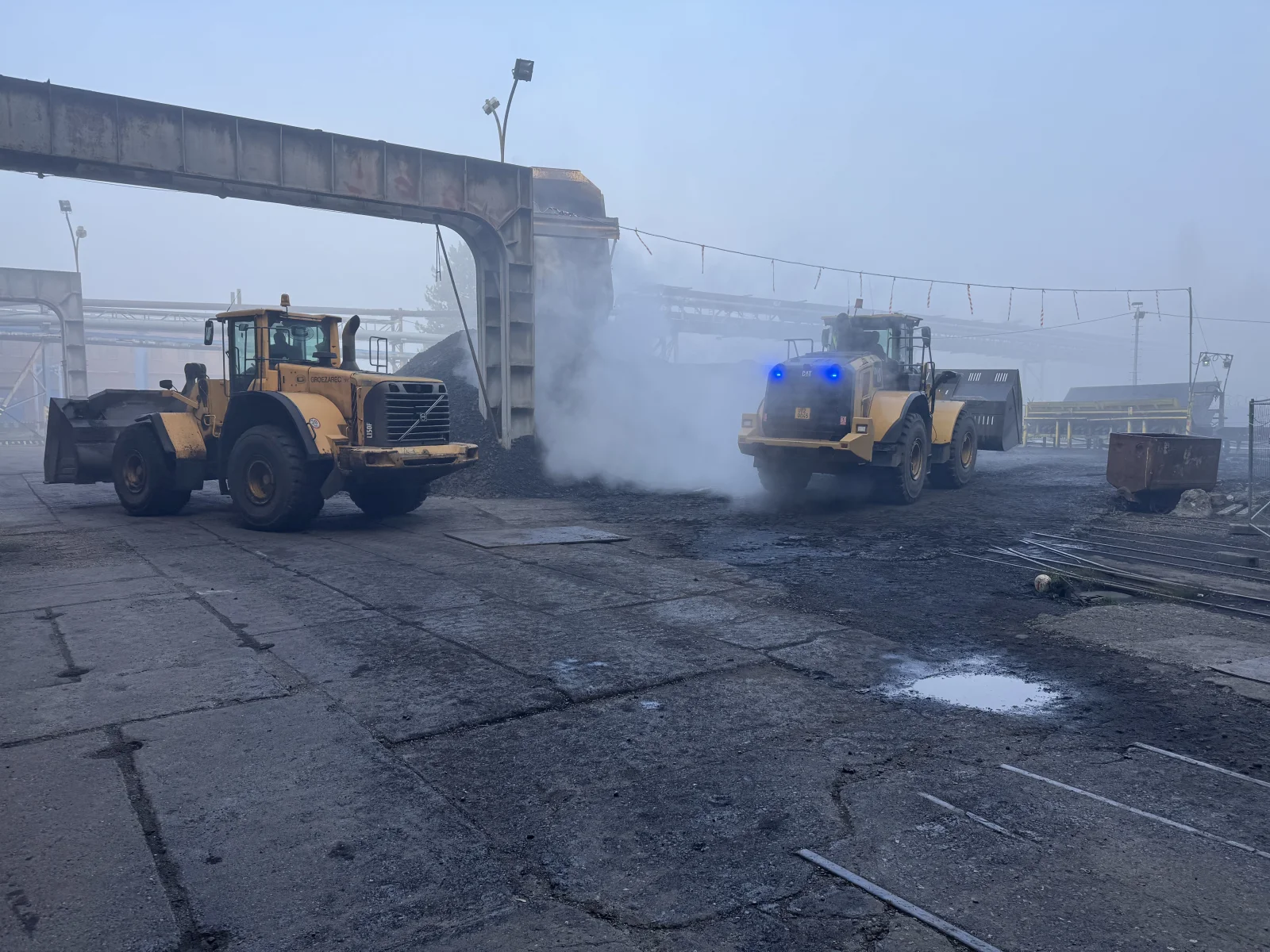
At the former Czechoslovak Army Mine (ČSA) in Karviná, the liquidation of mine shafts continues. In November 2026, it was the turn of the ČSA 2 shaft, above which stands the characteristic hammer headframe. The more than one-kilometer-deep mine workings, whose history reaches back to the mid-19th century, are being gradually filled with tens of thousands of cubic meters of backfill material.
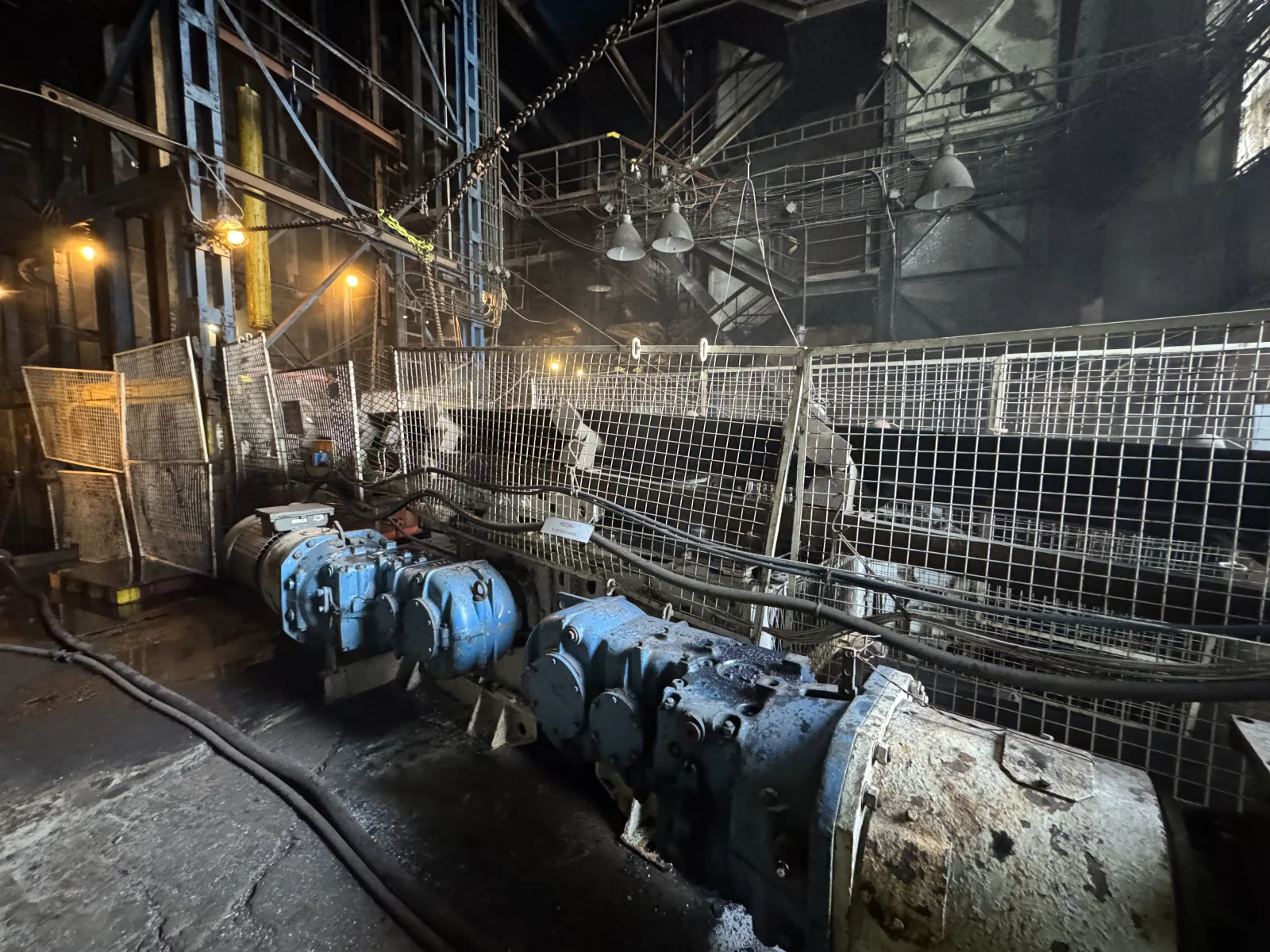
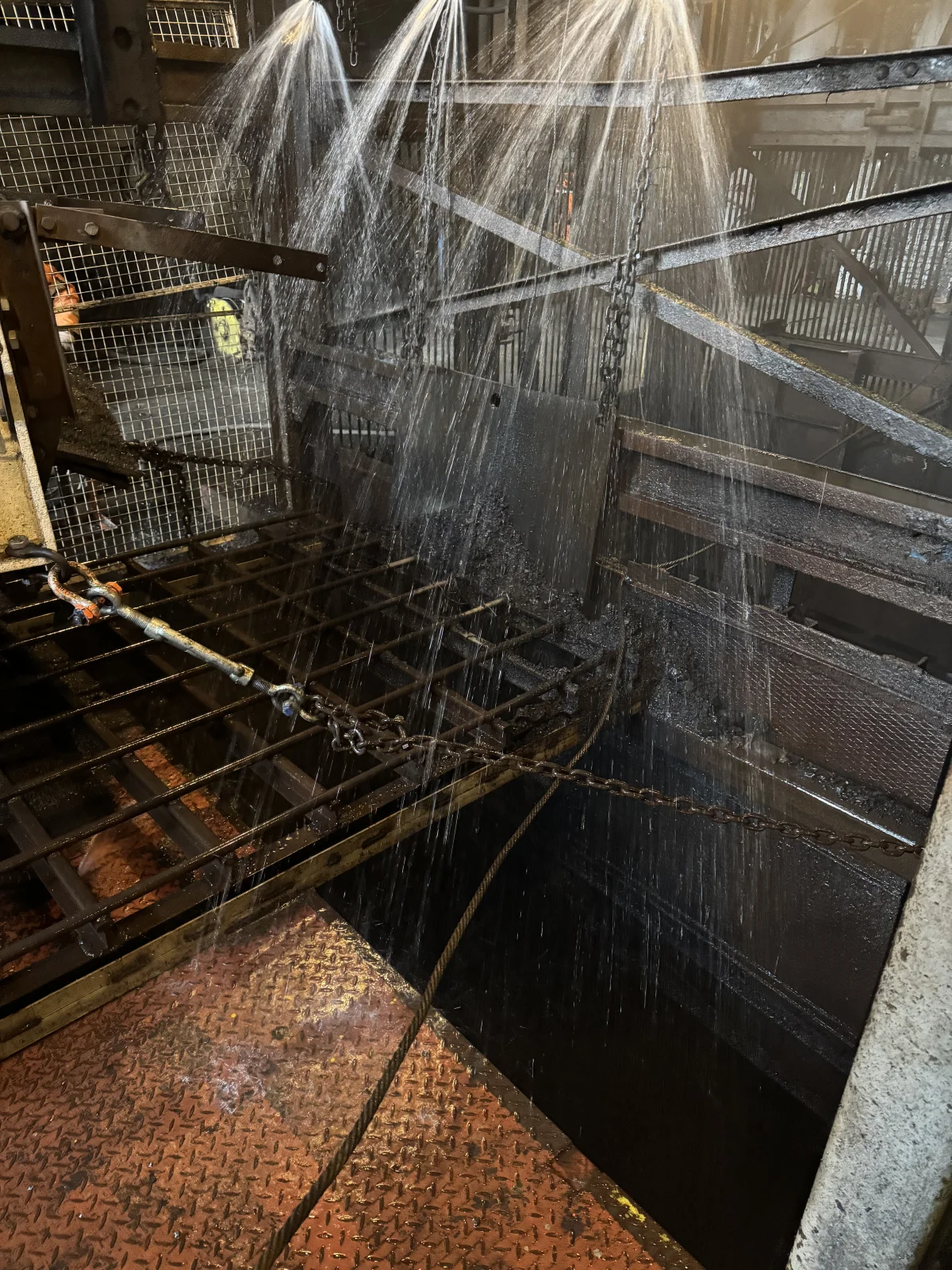
There is a lot of activity in the grounds of the former mine. Heavy loaders move piles of waste rock, excavators transfer the material onto conveyor belts, and the belts carry it toward the mouth of the hoisting shaft. Fog lingers everywhere, with the outlines of machines and industrial structures breaking through it here and there. Behind the activity on the surface, a much less visible process is taking place. The material is gradually filling the space that miners deepened over generations and used to travel underground.
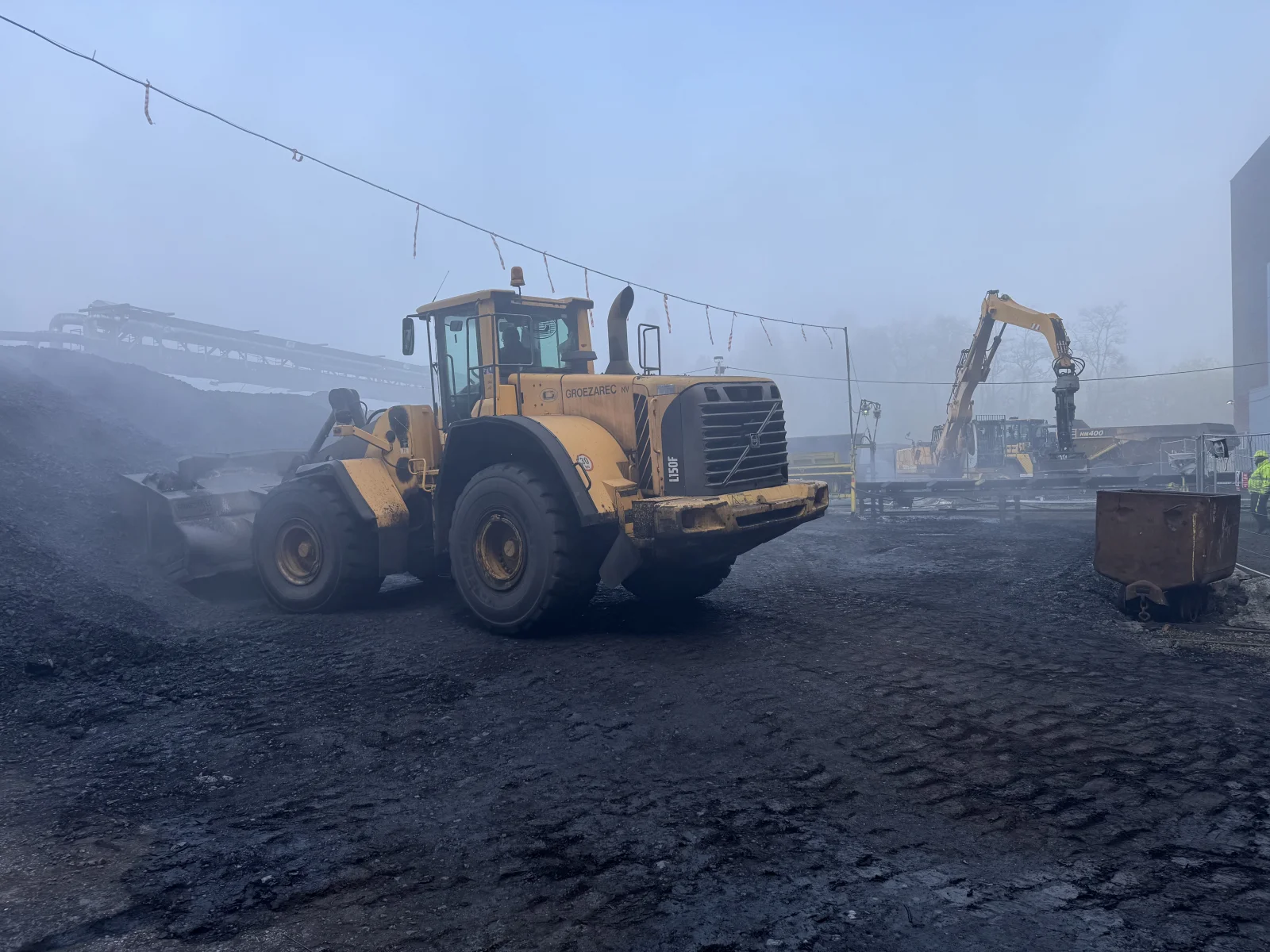
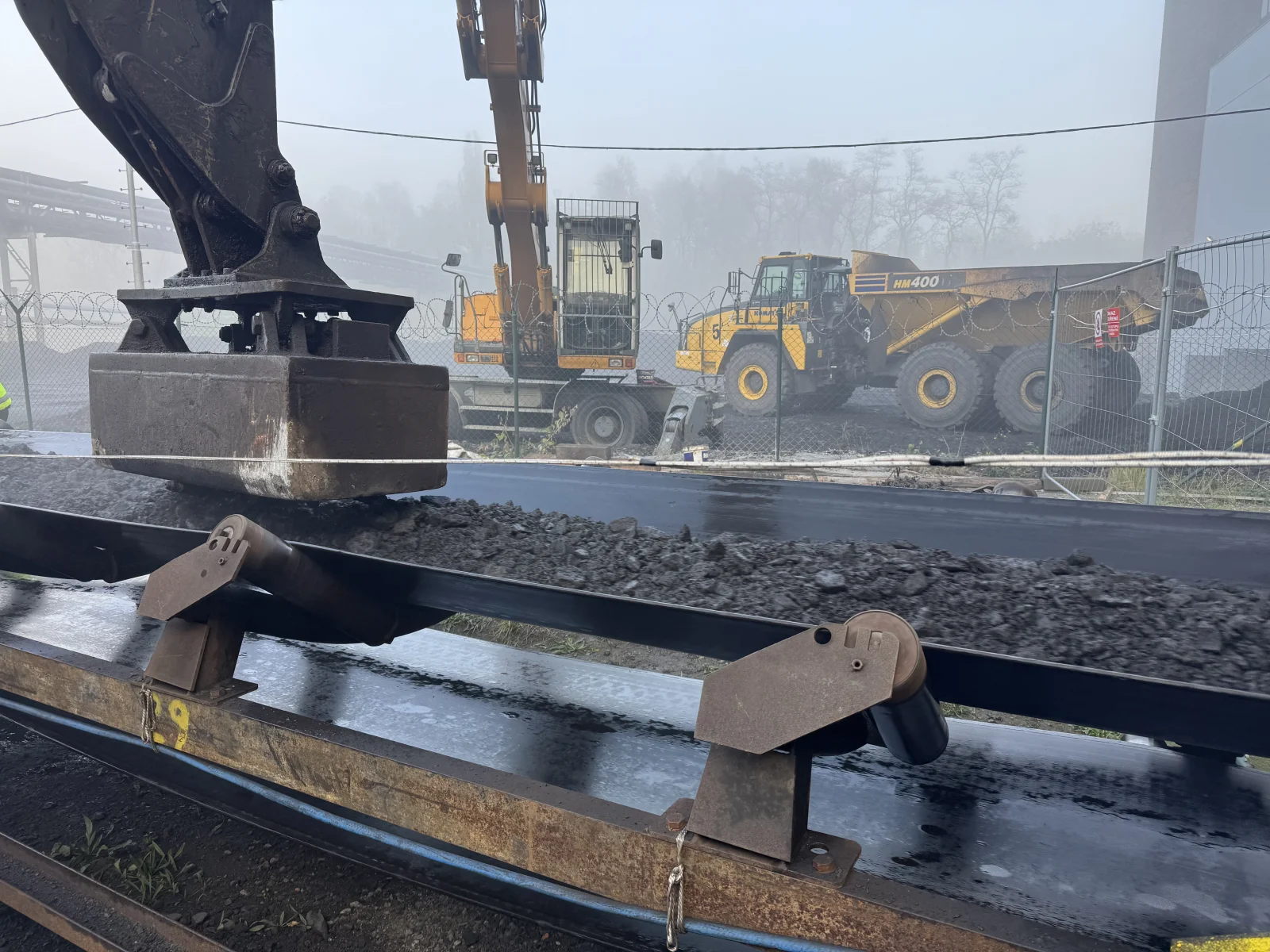
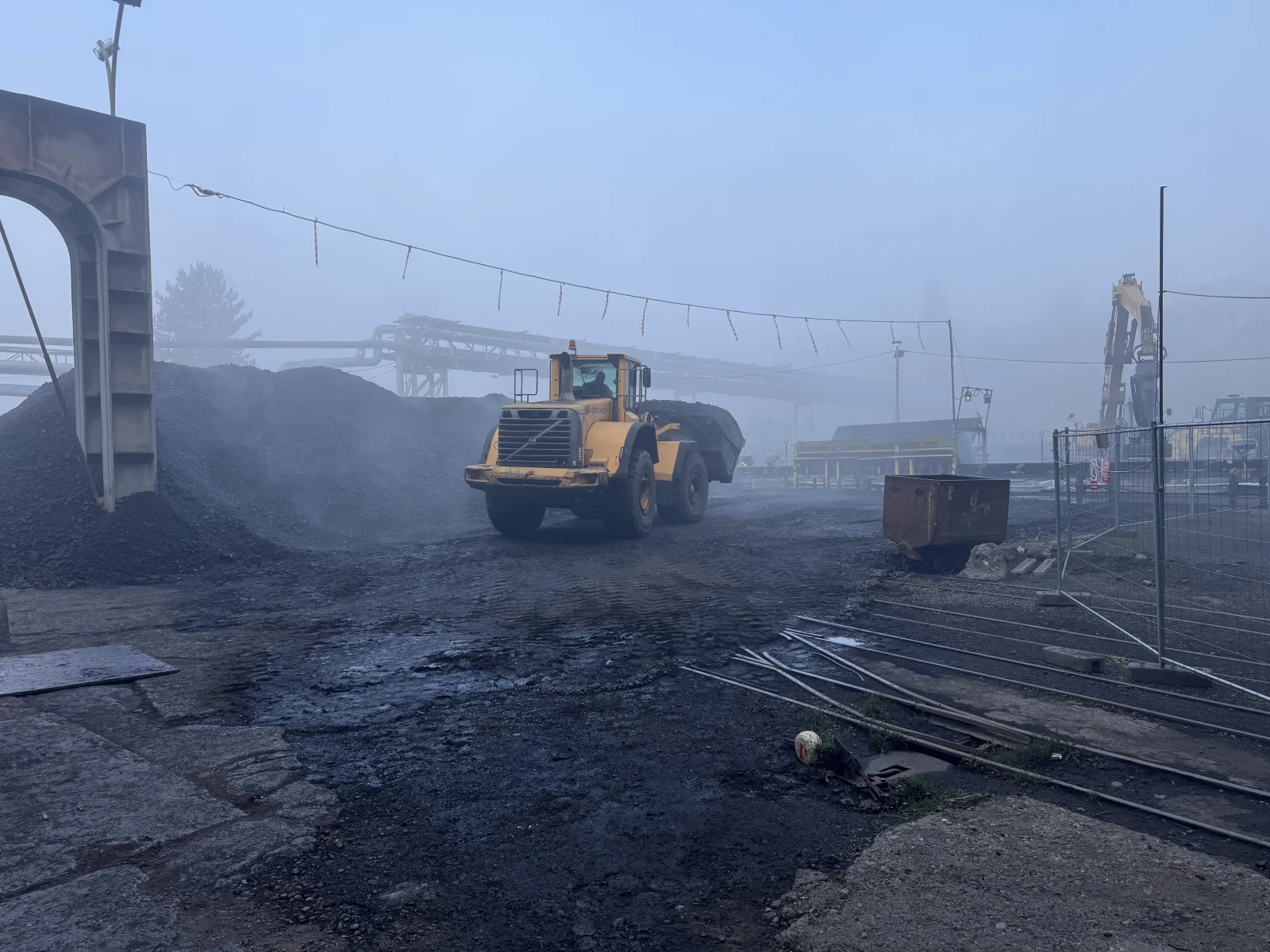
The history of the ČSA 2 shaft began in 1862. It originally reached a depth of 334 meters, but with advancing mining it was repeatedly deepened. Most recently in 2012 and 2013, when another 91 meters were added. Its final depth reached 1,049 meters.
Above the shaft stands a nearly 64-meter-high headframe with a steel structure and brick infill, built according to a design by architect Jaromír Moučka from the turn of the 1940s and 1950s. Because of its distinctive shape, it became known as hammer-shaped. Two hoisting machines located directly in the headframe ensured transport of miners and material between the surface and the individual levels of the mine.
Thousands of cubic meters underground
The first stage of backfilling began on 12 October 2026. Over five days, it was possible to fill the section of the shaft approximately 115 meters deep that had been flooded with water. More than 5,300 cubic meters of material were used. The second stage started on 2 November. The work was planned as continuous three-shift operation. Another approximately 46 thousand cubic meters of backfill material were to be gradually sent into the shaft, filling about 900 meters of its depth.
Backfilling a mine working this deep is not only a matter of transporting the necessary amount of waste rock. Proper placement and subsequent settling of the material are also important. After the backfilling is completed, a roughly two-month pause is therefore planned, during which any subsidence will be monitored. If necessary, the shaft will be topped up again.
This will be followed by a two-meter layer of gravel, a concrete plug, and a reinforced-concrete safety slab measuring 13.1 × 13.1 meters. The state enterprise DIAMO plans to complete the final securing of the ČSA 2 shaft by August 2027.
A Landscape That Is Changing
Backfilling the Hammer Shaft is part of the broader liquidation of the ČSA Mine, where black coal mining ended in 2021. During its existence, more than 144 million tons of coal were extracted here.
In October 2026, the neighboring reinforced-concrete skip headframe above the ČSA 3 shaft disappeared from Karviná’s skyline. The nearly seventy-meter-high structure was removed by a controlled explosion. The shaft itself had already been backfilled during the previous period. The hammer headframe above the ČSA 2 shaft, by contrast, remains standing and is among the structures proposed for heritage protection.
The transformation of the former mine is thus taking place simultaneously above ground and deep below the surface. Some structures disappear within seconds, others are gradually emptied, cease to serve their original purpose, and wait for further use.
After more than a century and a half, the direction of movement has reversed. While once coal was mined from underground and miners rode up to the surface, today thousands of tons of material are returning to the same depth. Machines, buildings, and an industrial landscape remain on the surface, a landscape whose form will continue to change. Below ground, a world that shaped life in the Karviná region for generations is gradually being closed off.
Text © Lukáš Horký · Photography © Lukáš Horký