Journal · 2026-10-26
Stará Voda. A Place That Outlived Its Inhabitants
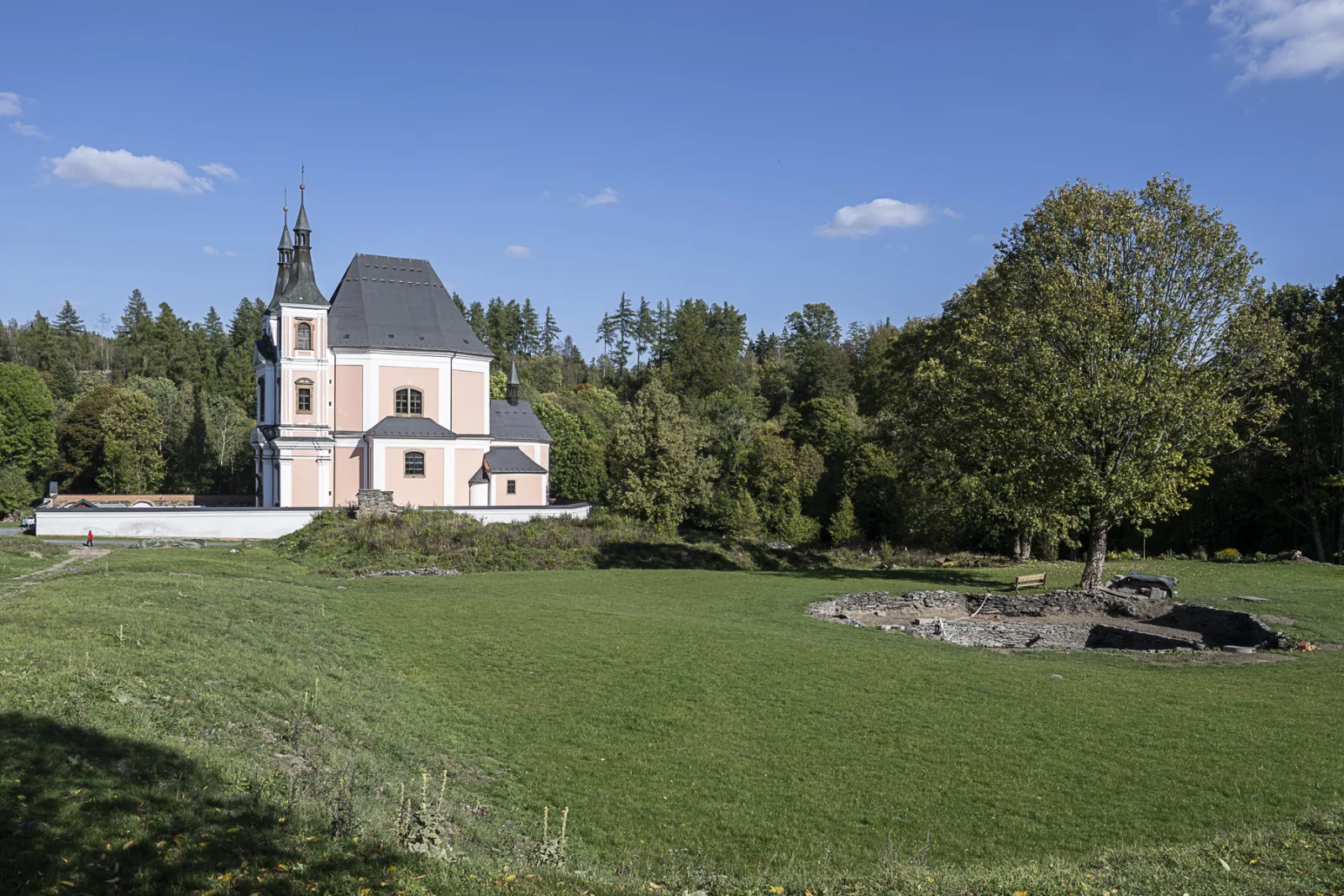
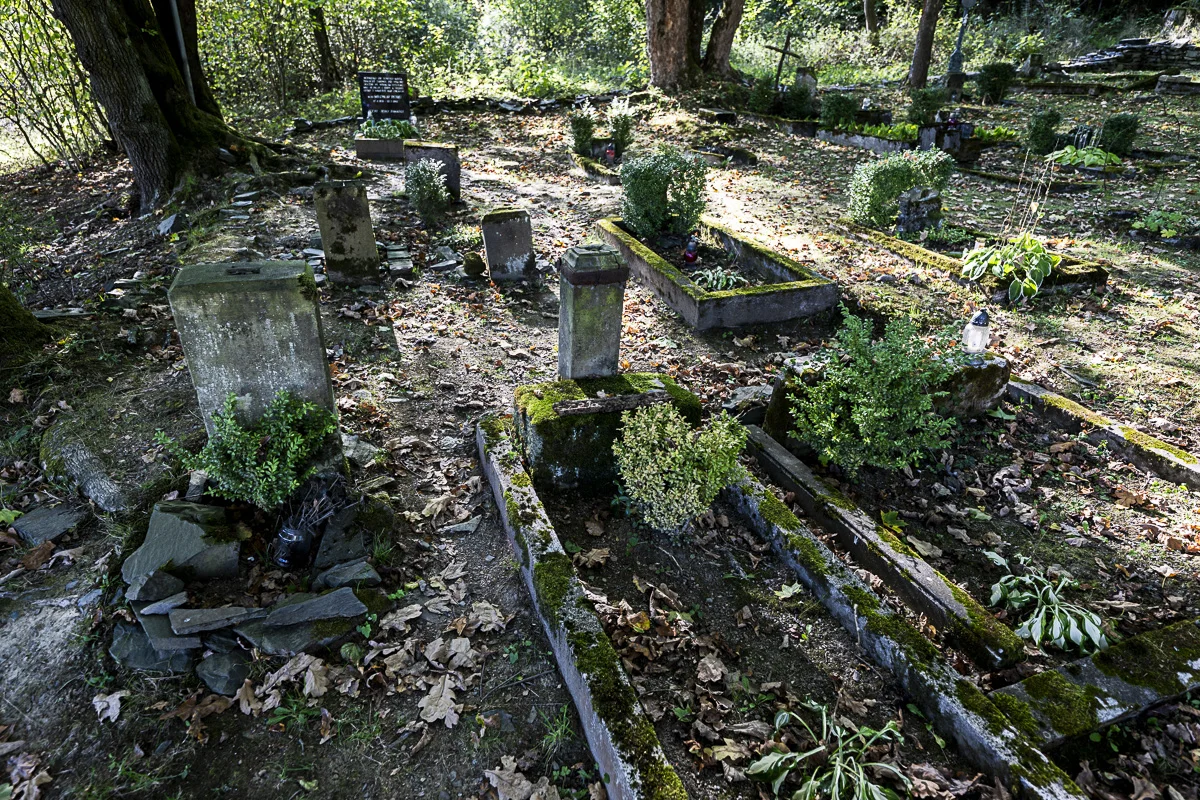
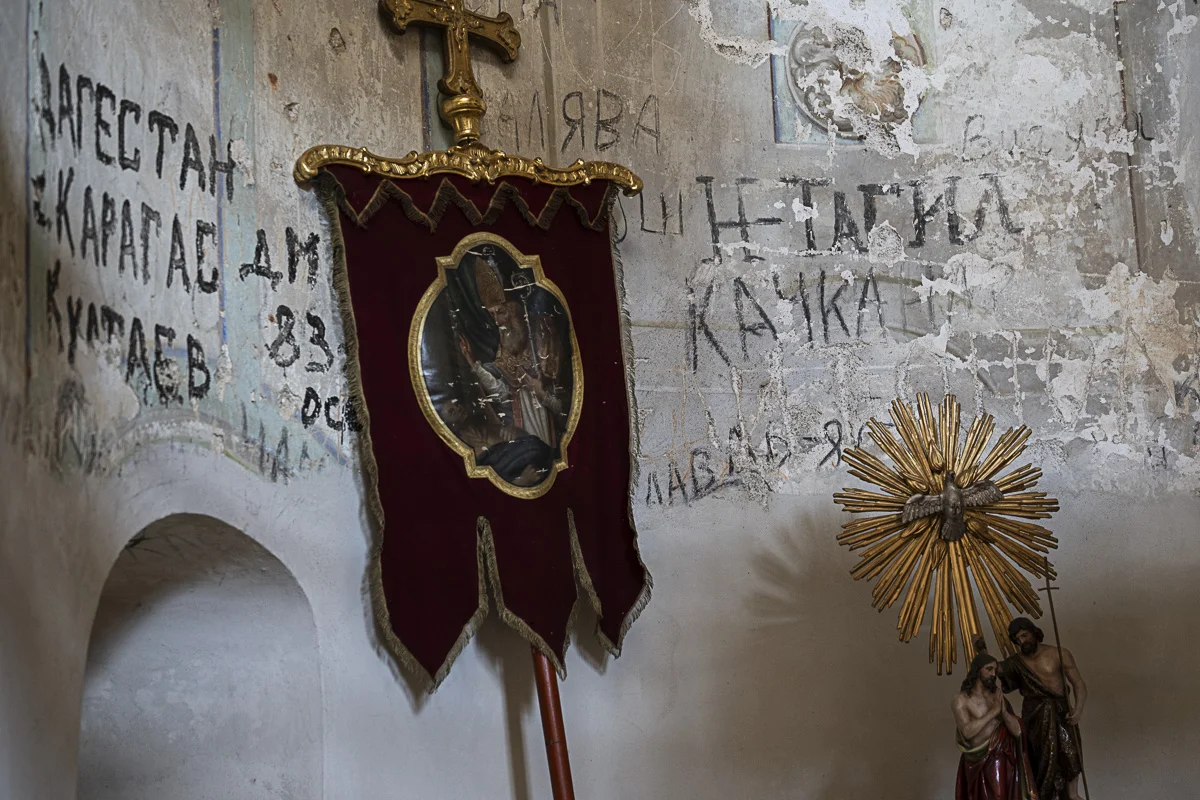
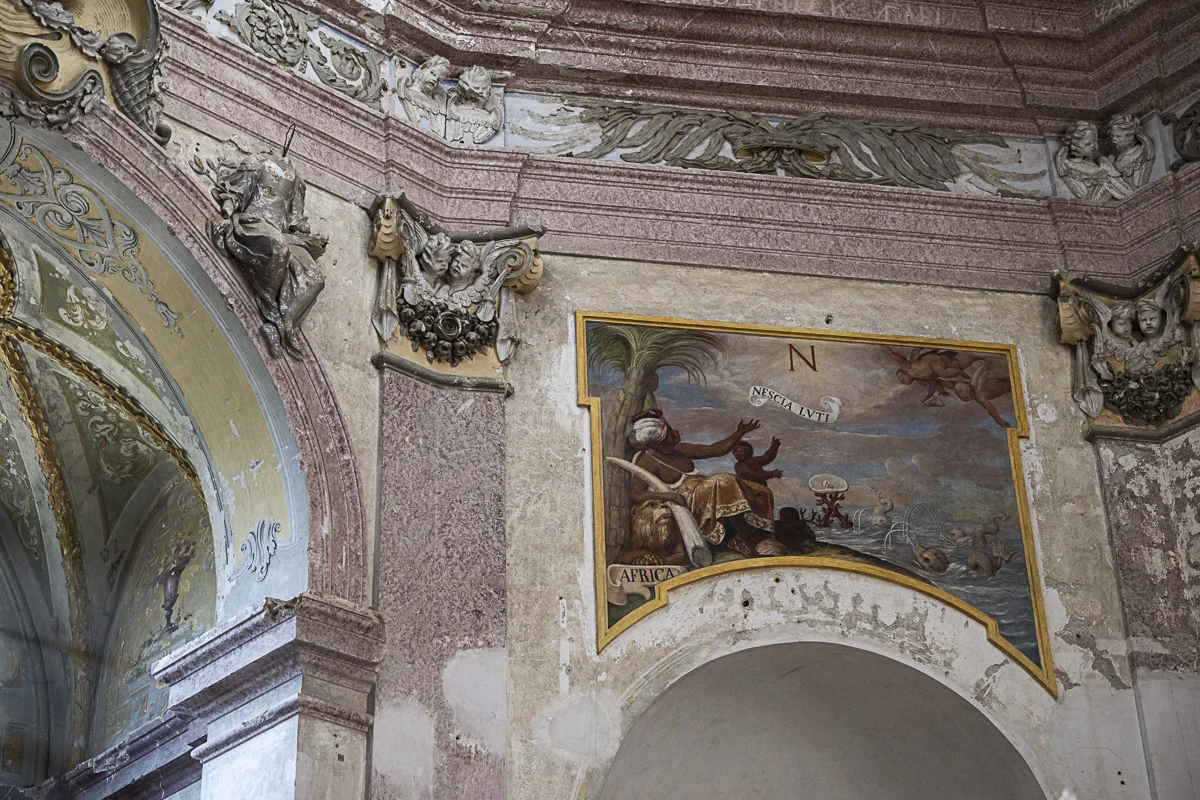
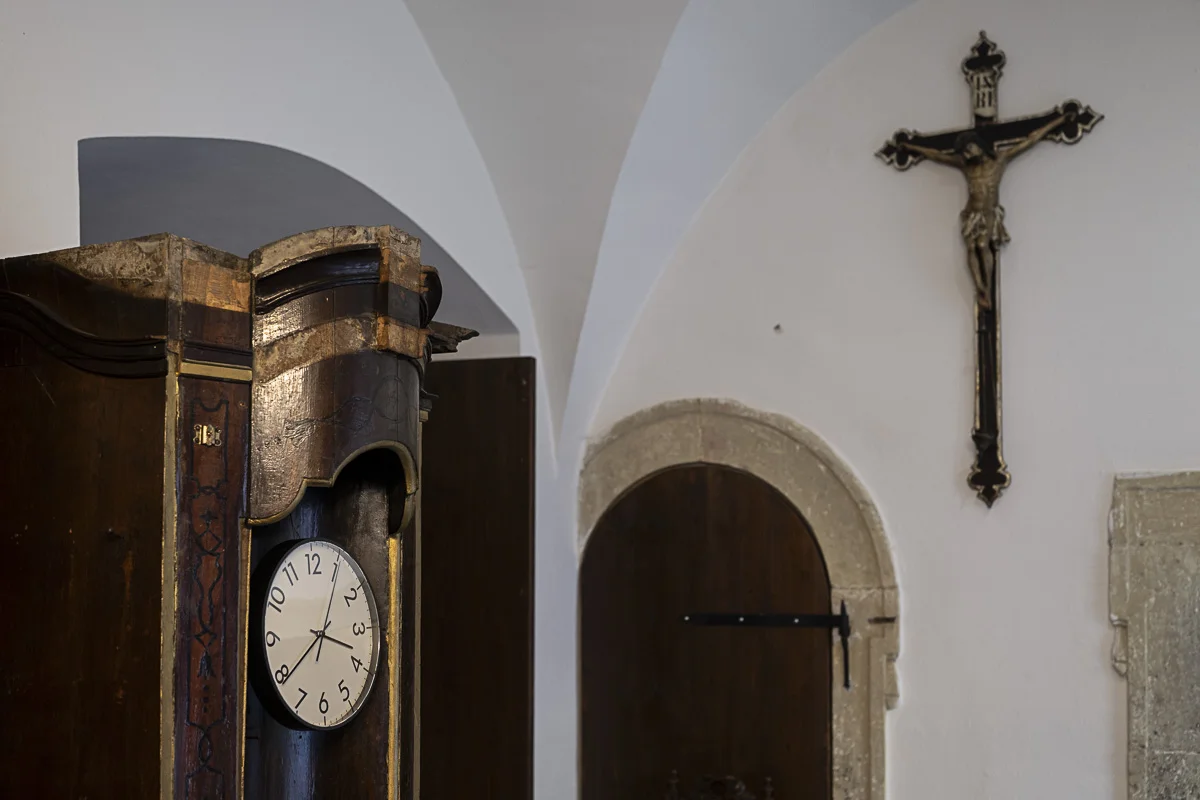
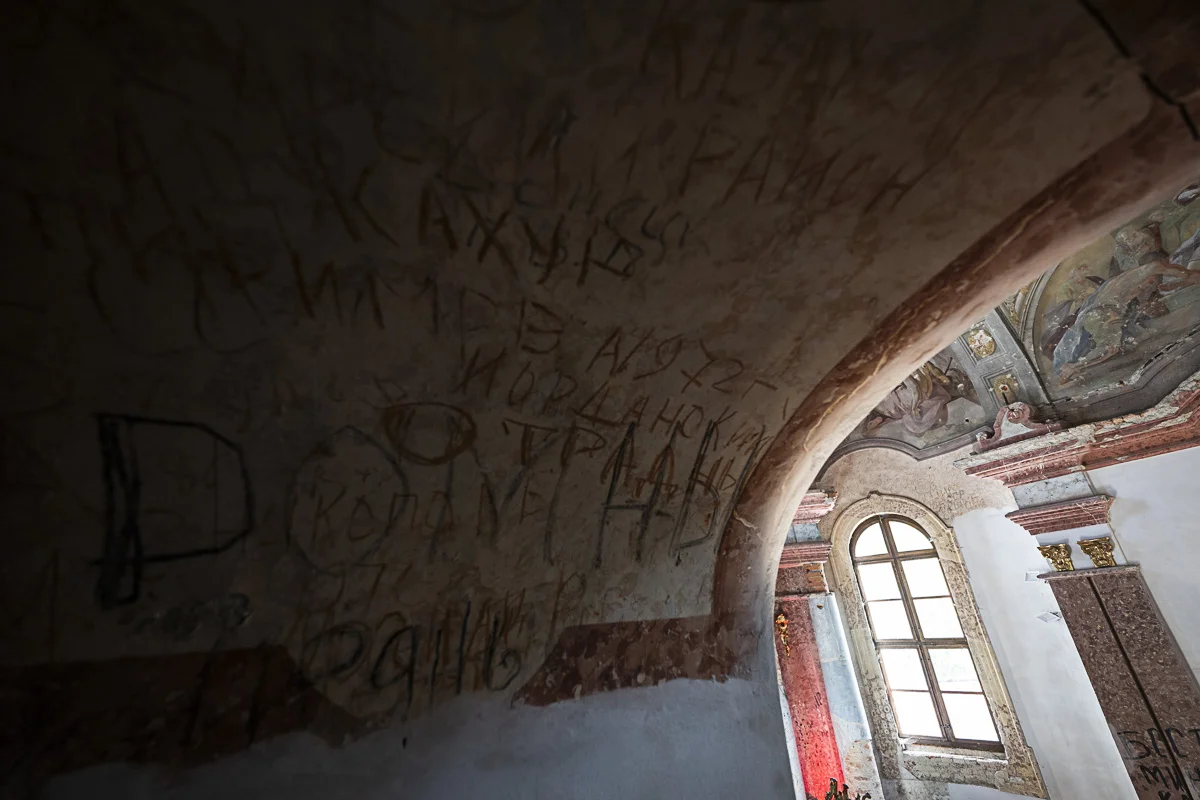
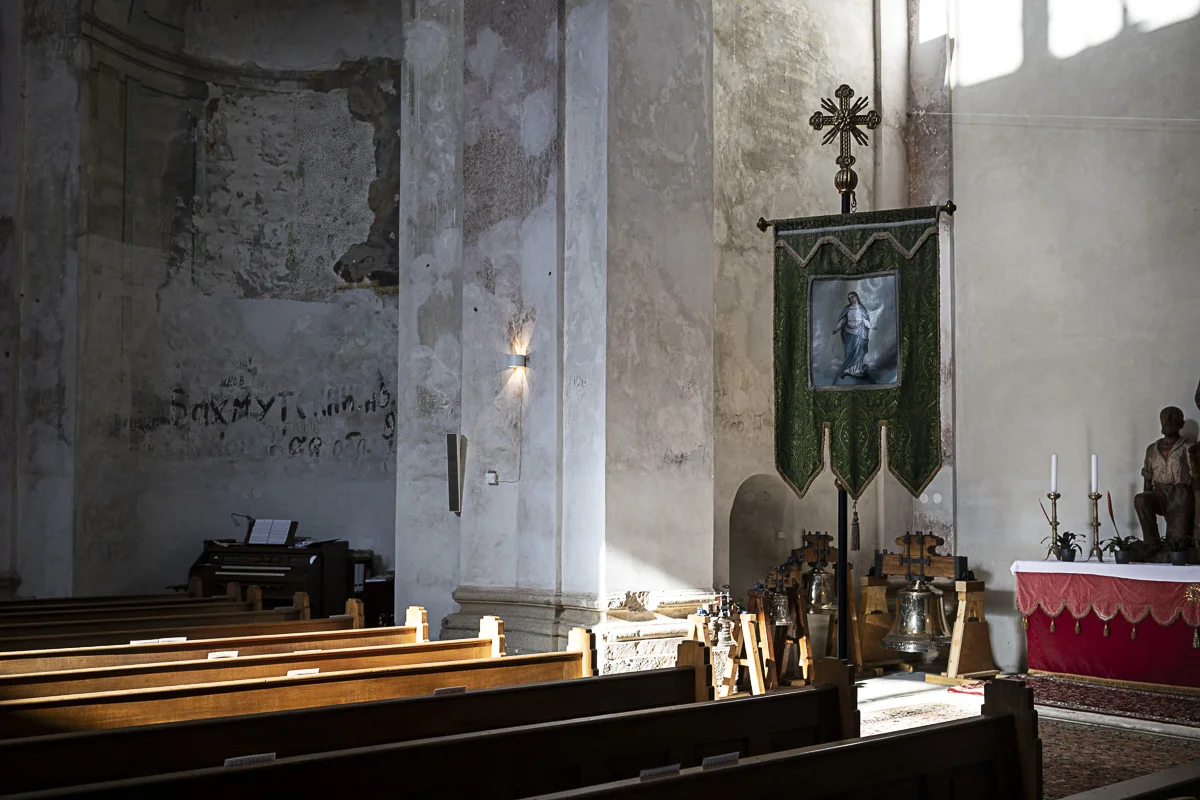
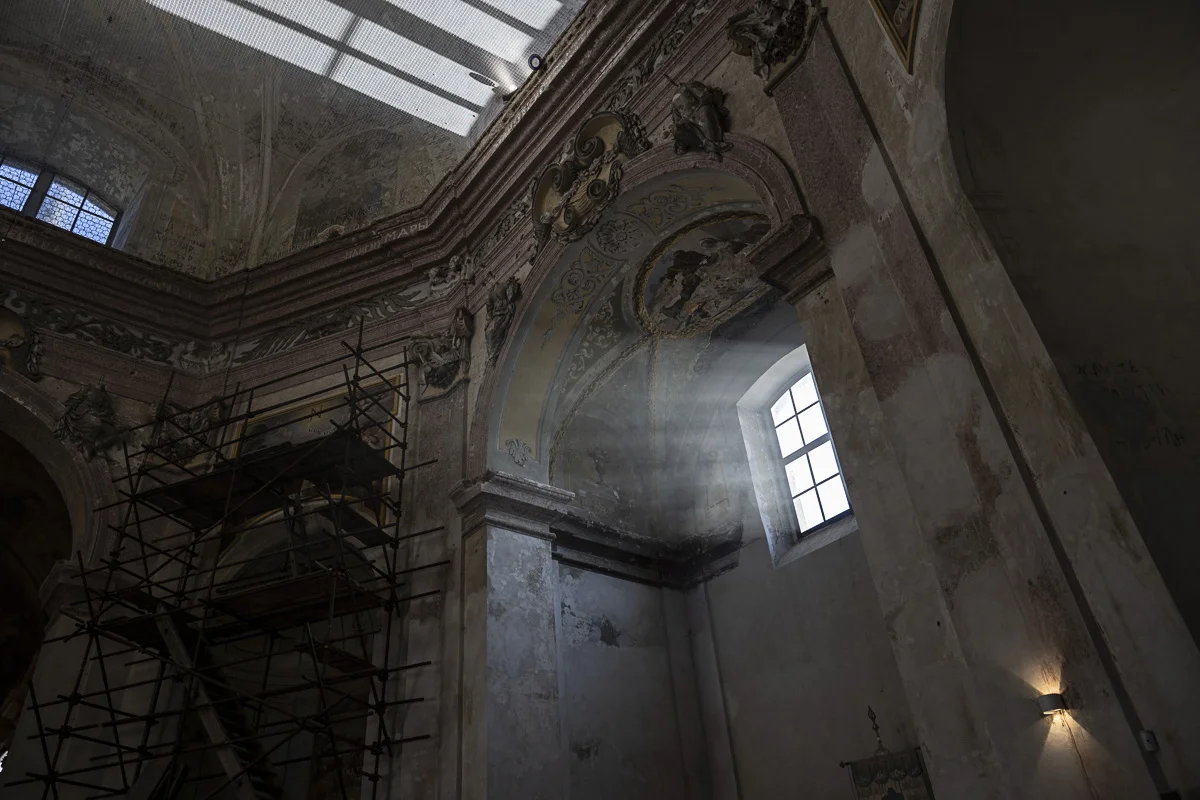
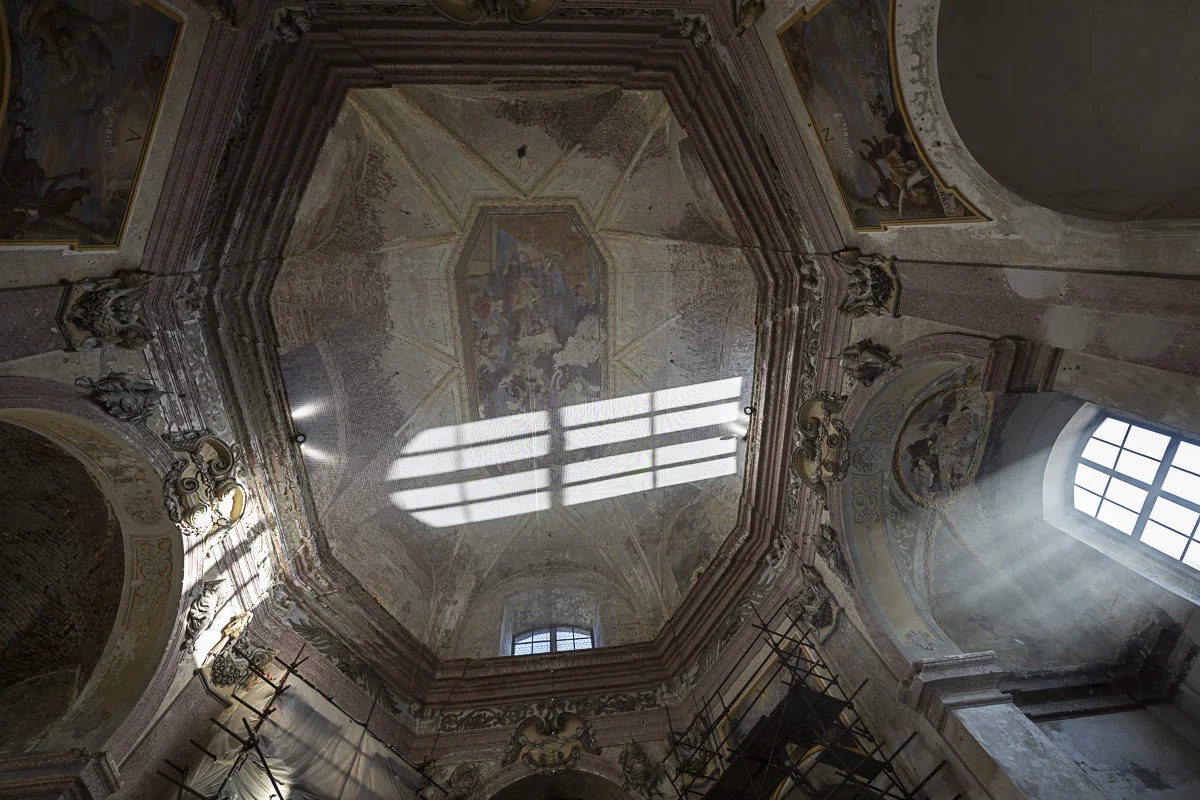
The Baroque pilgrimage church of St. Anne and St. James the Greater today stands almost alone in the landscape of Libavá. The village that once surrounded it disappeared after the war, the German inhabitants were expelled, and the place was taken over by the army. What remained was the church, the ruins of the monastery, an overgrowing cemetery, and traces of several decades of violence and oblivion. The photographic series was created in the autumn of 2026, just before the installation of extensive wooden scaffolding that will transform the church interior for a long time because of the rescue of its critically endangered vault and ceiling. The photographs follow layers that are still openly legible: fragments of paintings, damaged statues, bullet holes and inscriptions in the walls, gravestones disappearing into the forest, and places whose former appearance can now only be intuited.
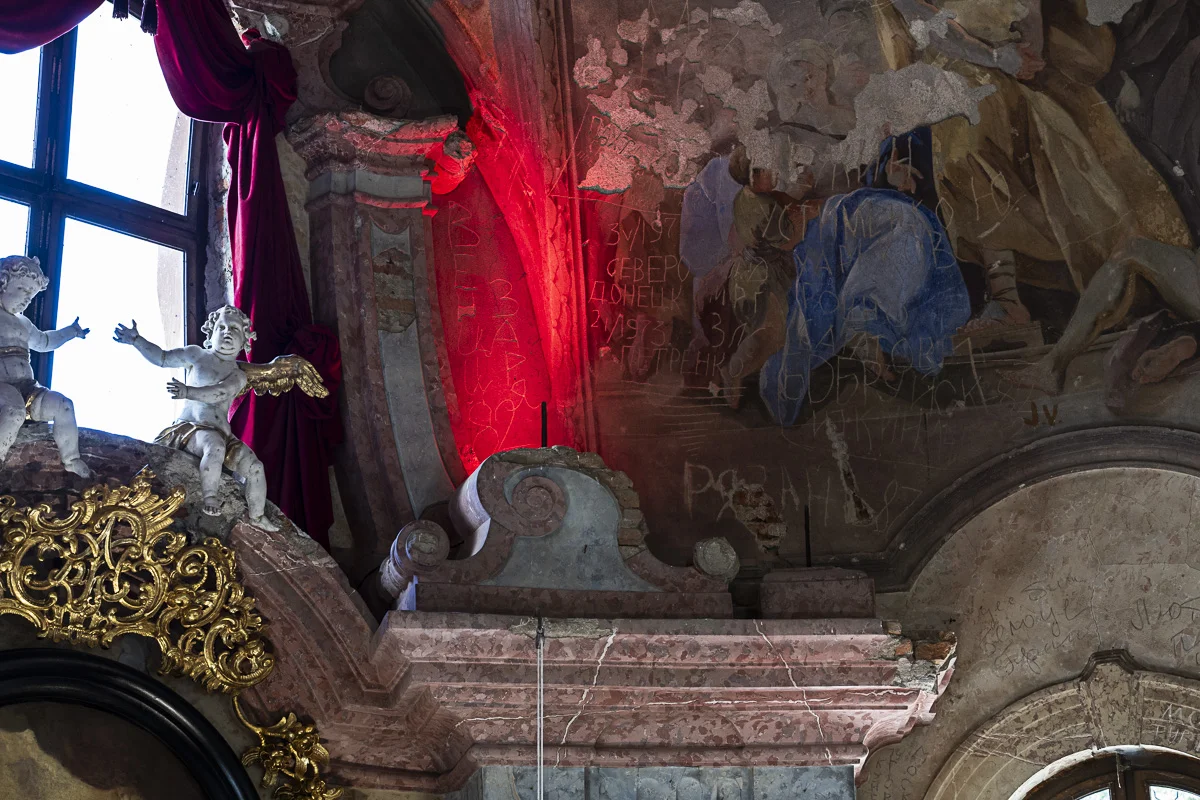
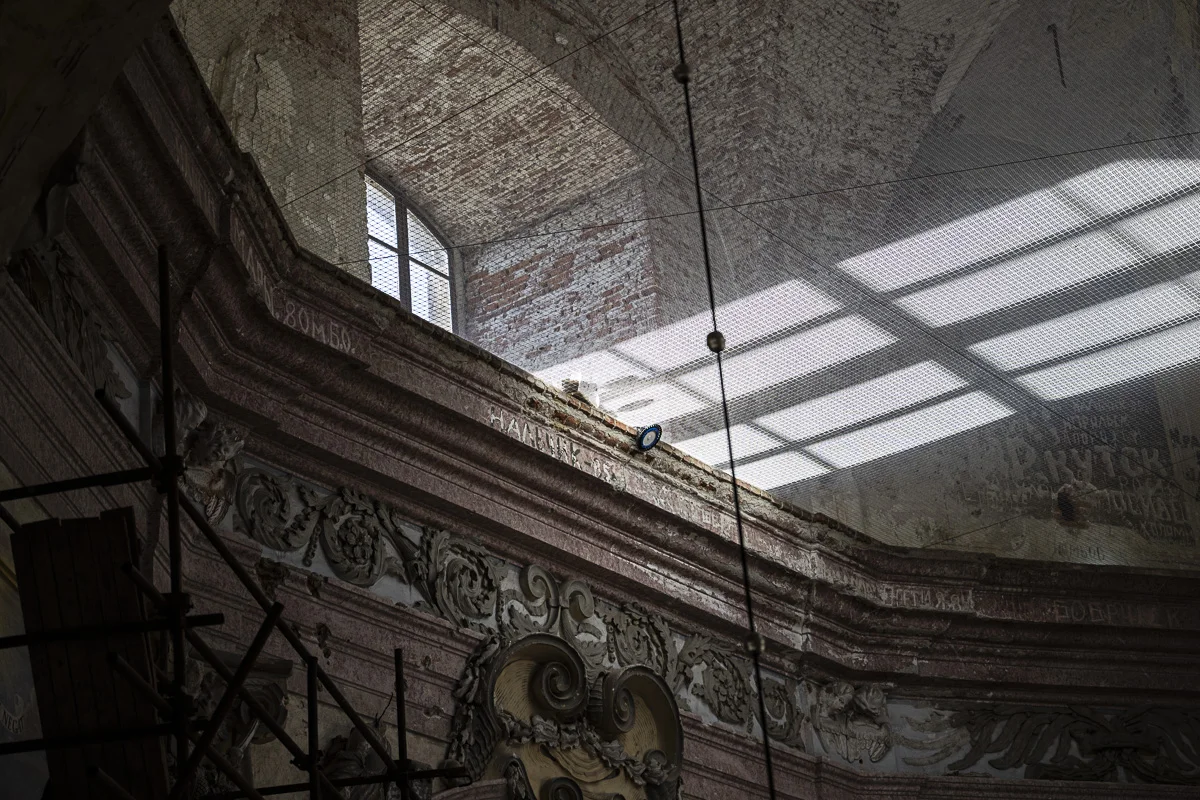
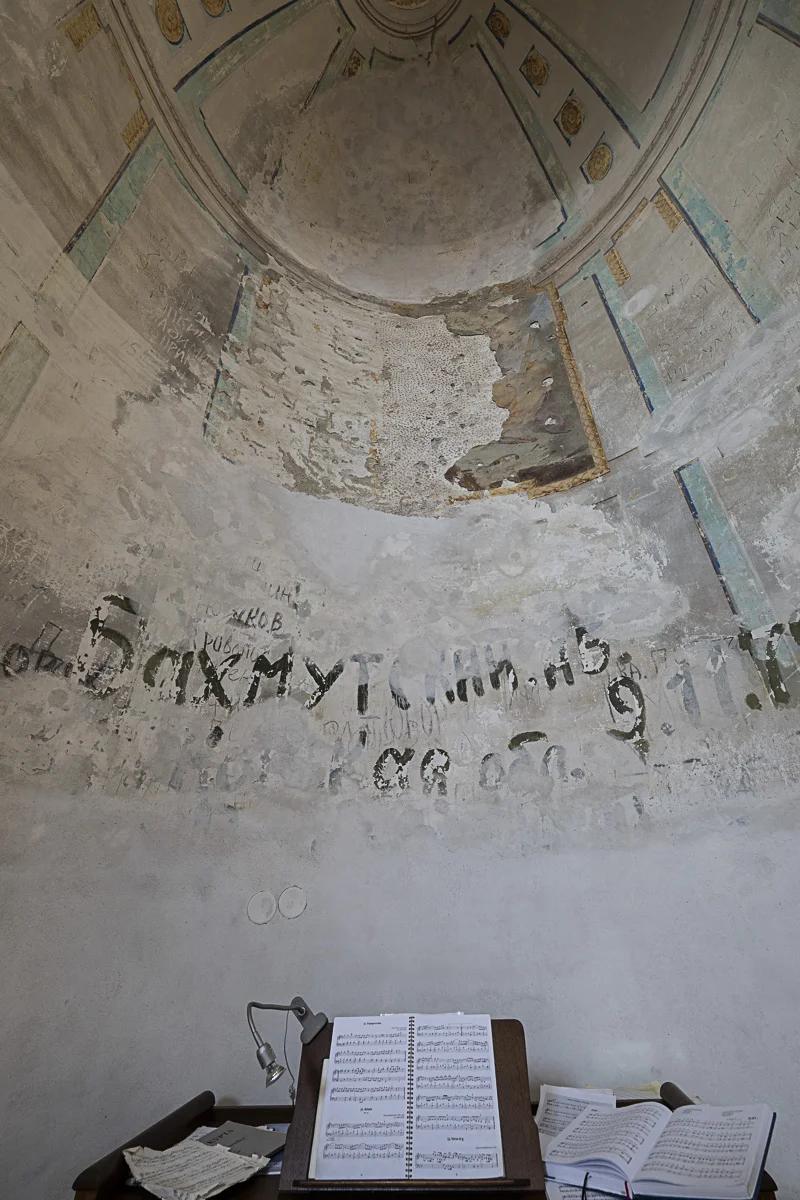
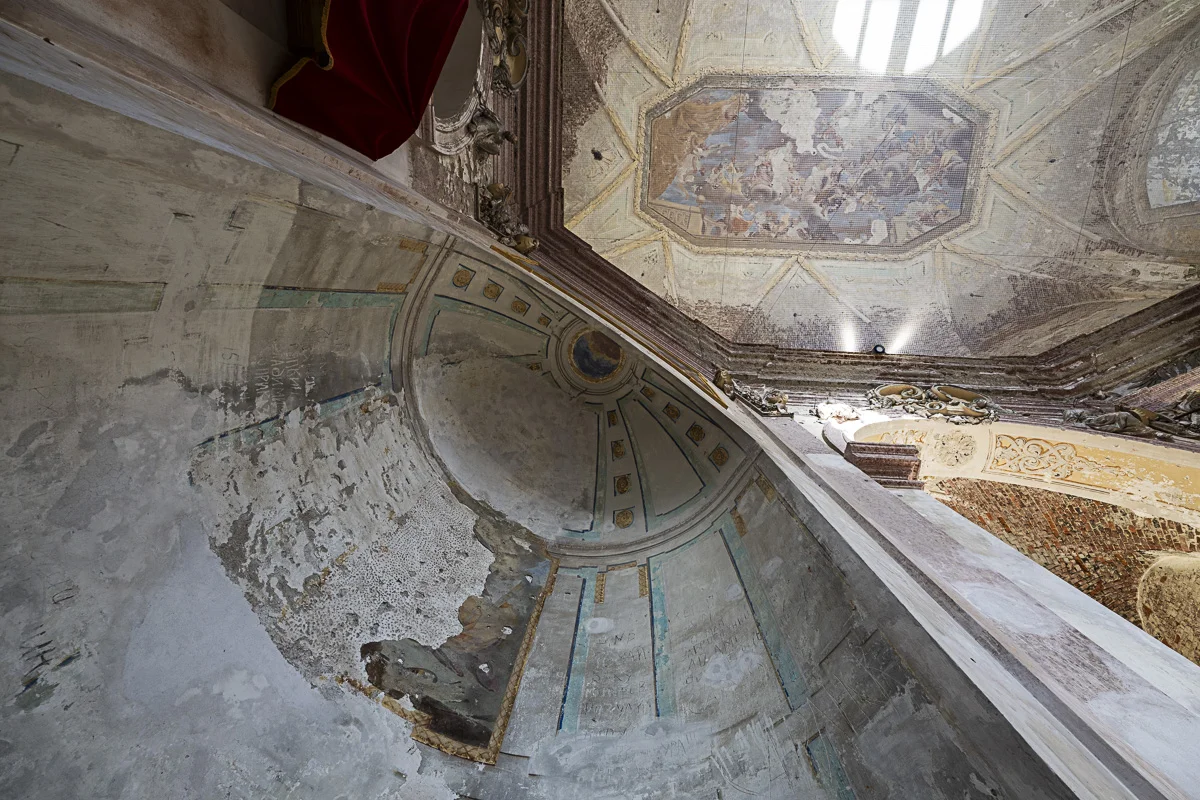
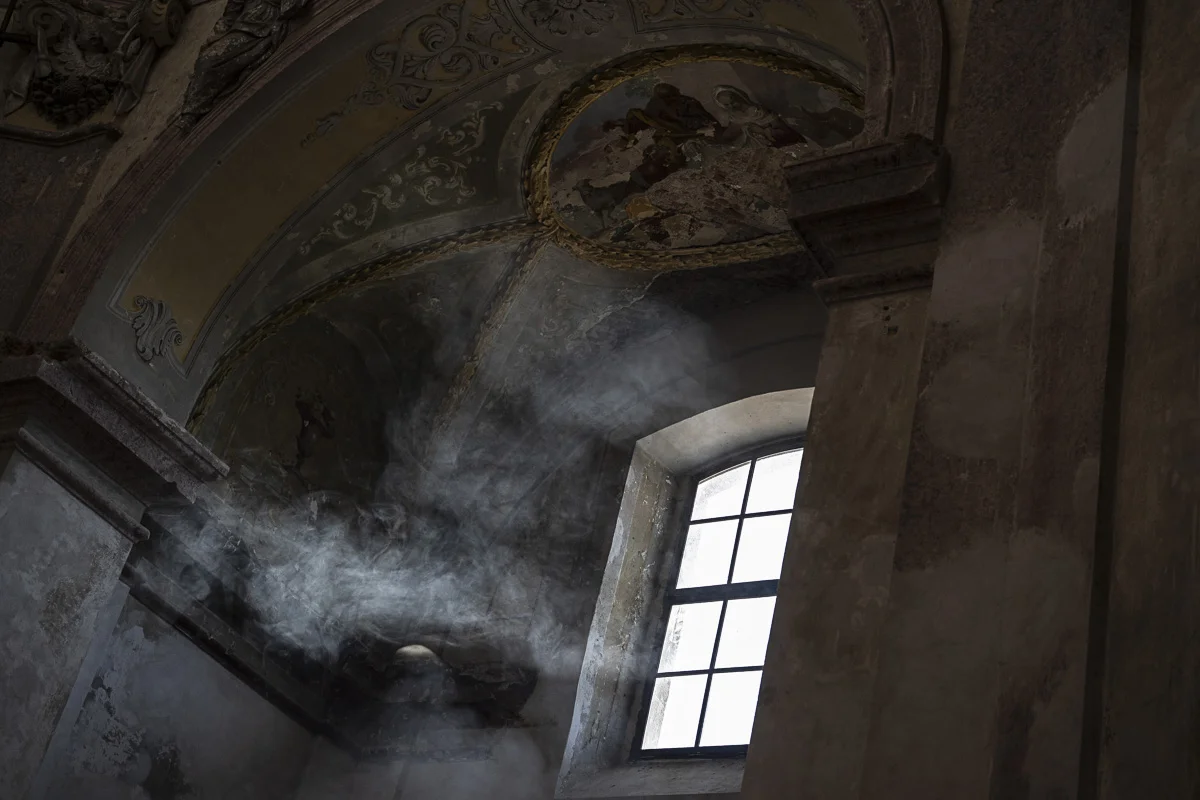
At first glance, it is a church. A monumental Baroque building standing almost alone in the landscape of Libavá. Two towers, a high nave, remains of the ambulatories. The walls are inscribed. The plaster is peeling away in several layers. Beneath one layer a color appears, beneath another a fragment of the original painting. Into the Baroque decoration intrude bullet holes, scratches, and inscriptions in Cyrillic. Some parts have been repaired, others seem still to be waiting for a decision whether they are to be saved or left as testimony.
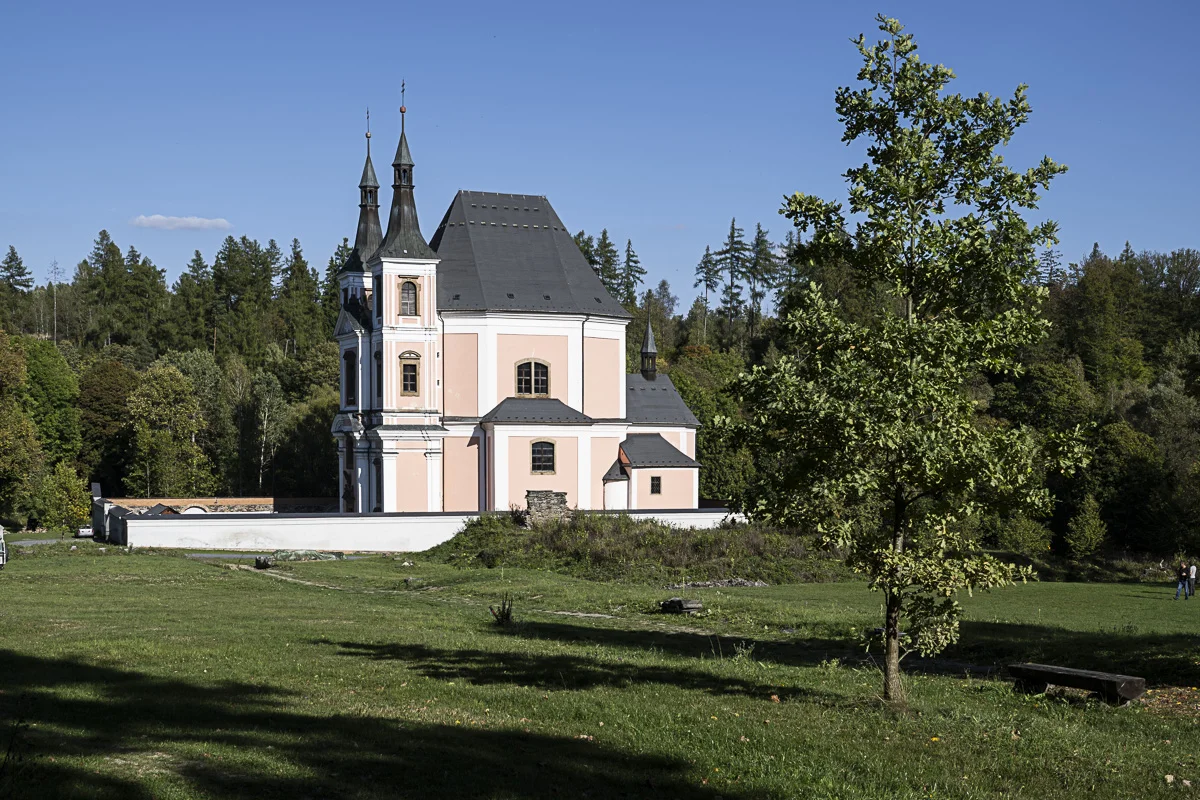
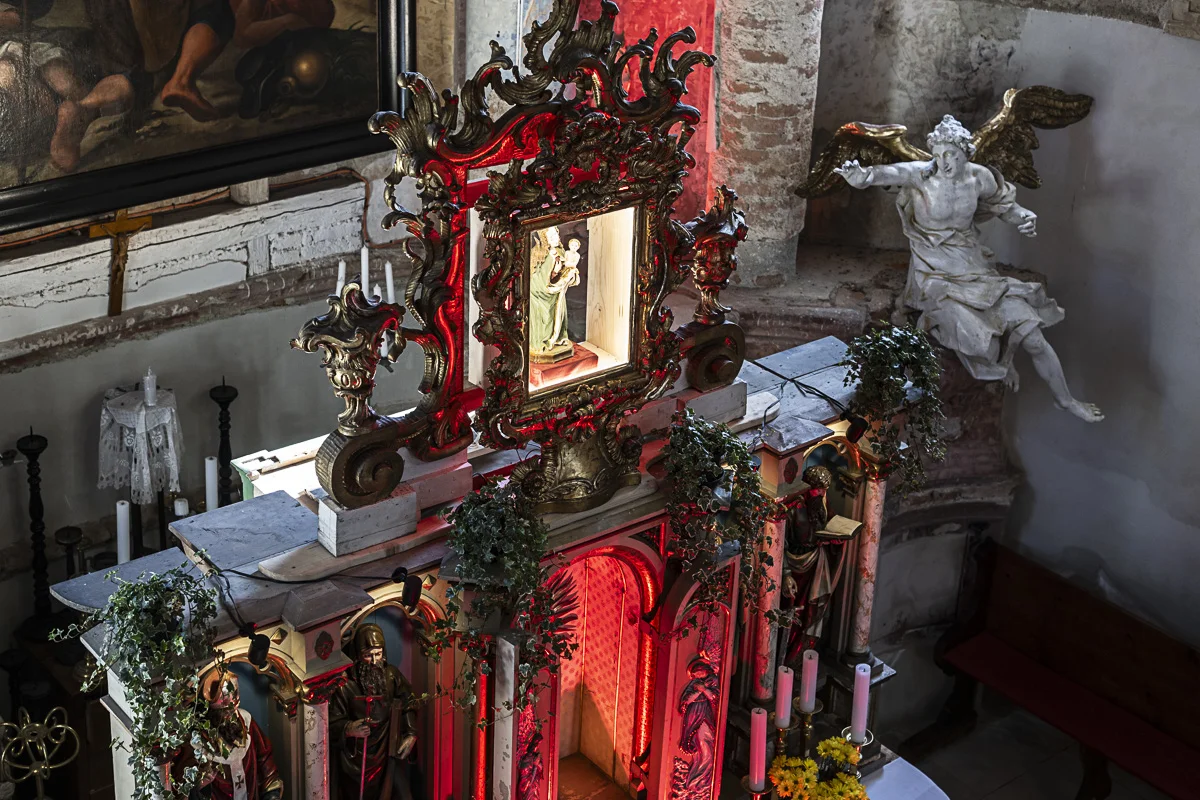
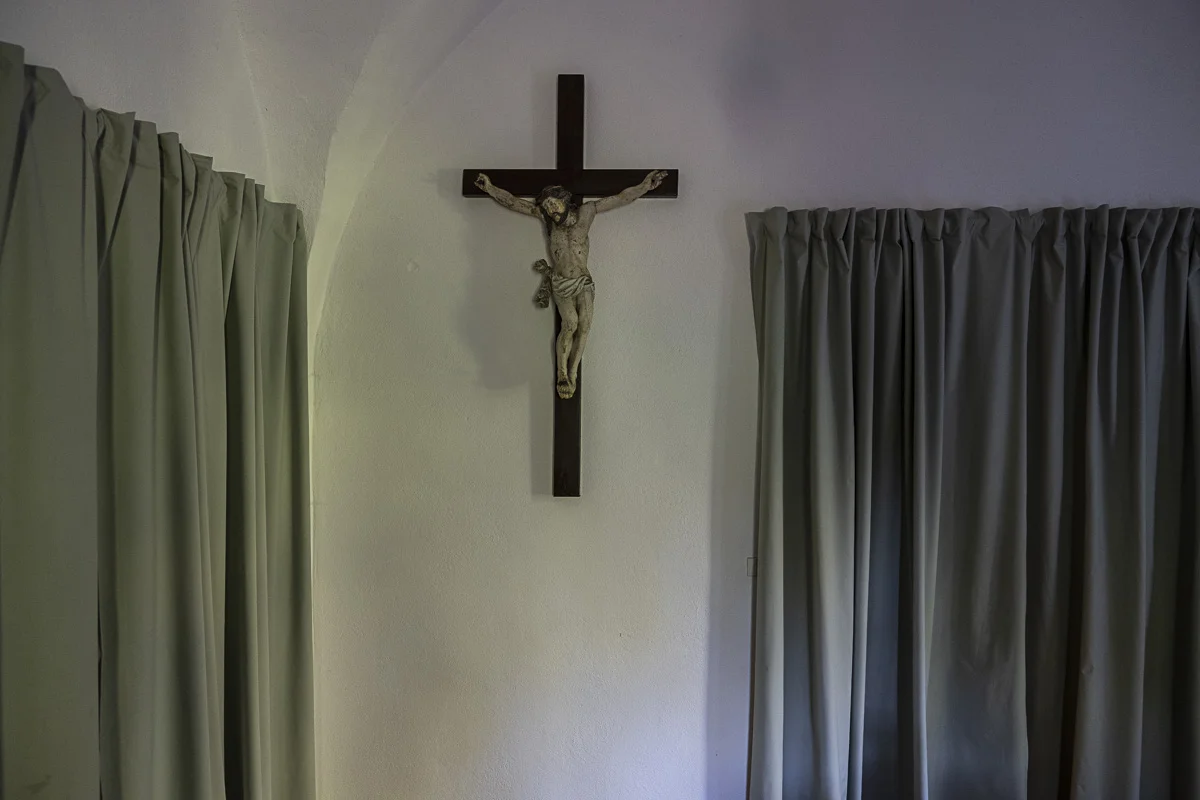
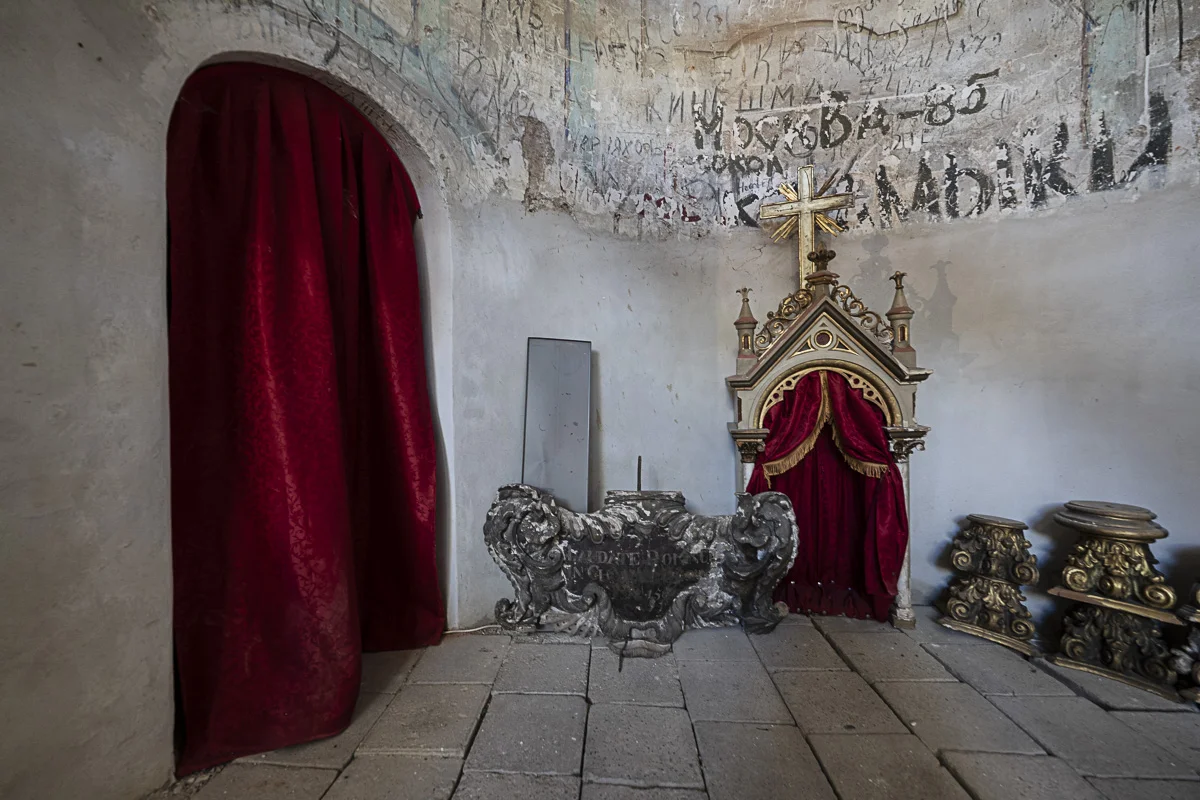
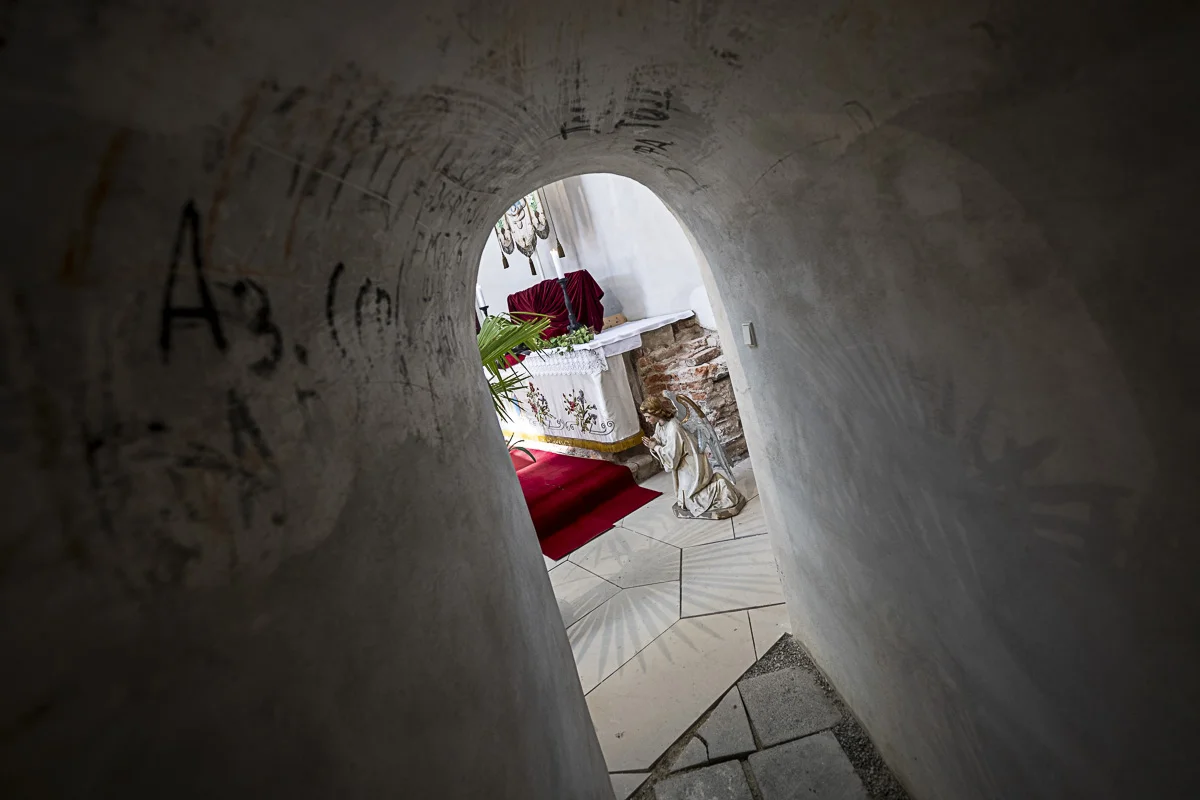
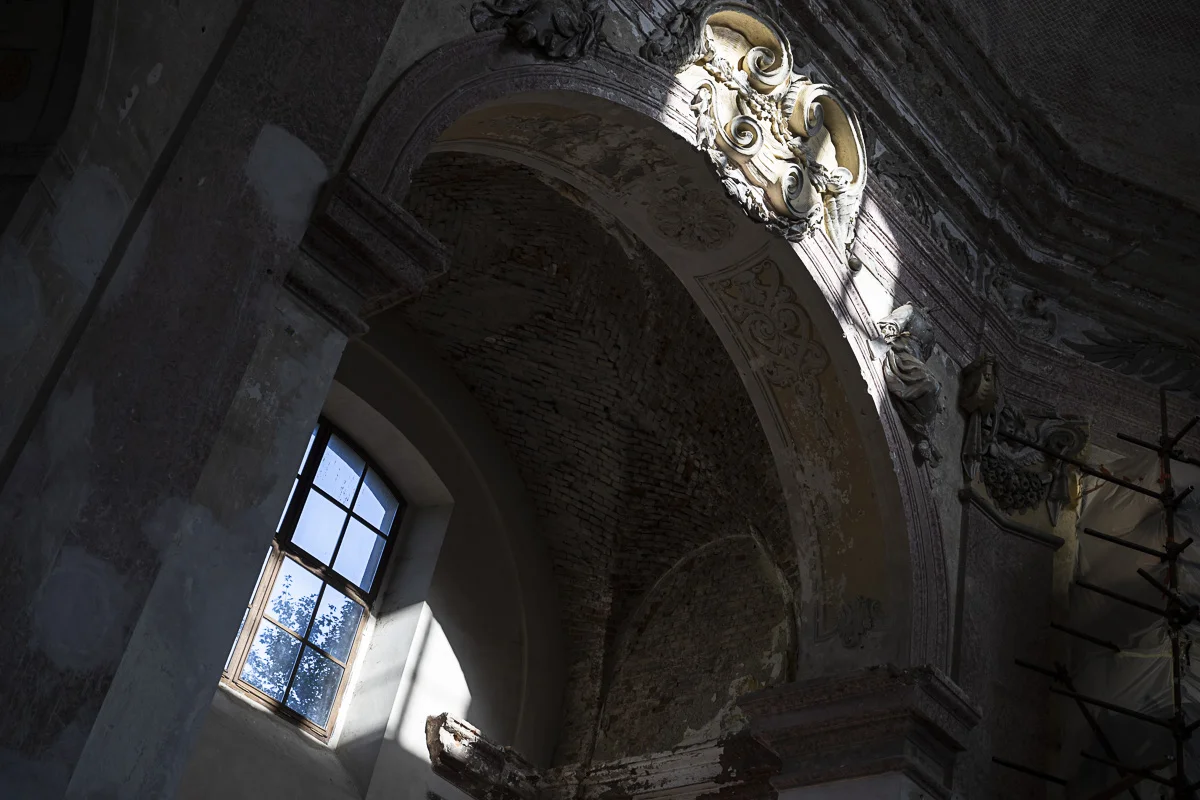
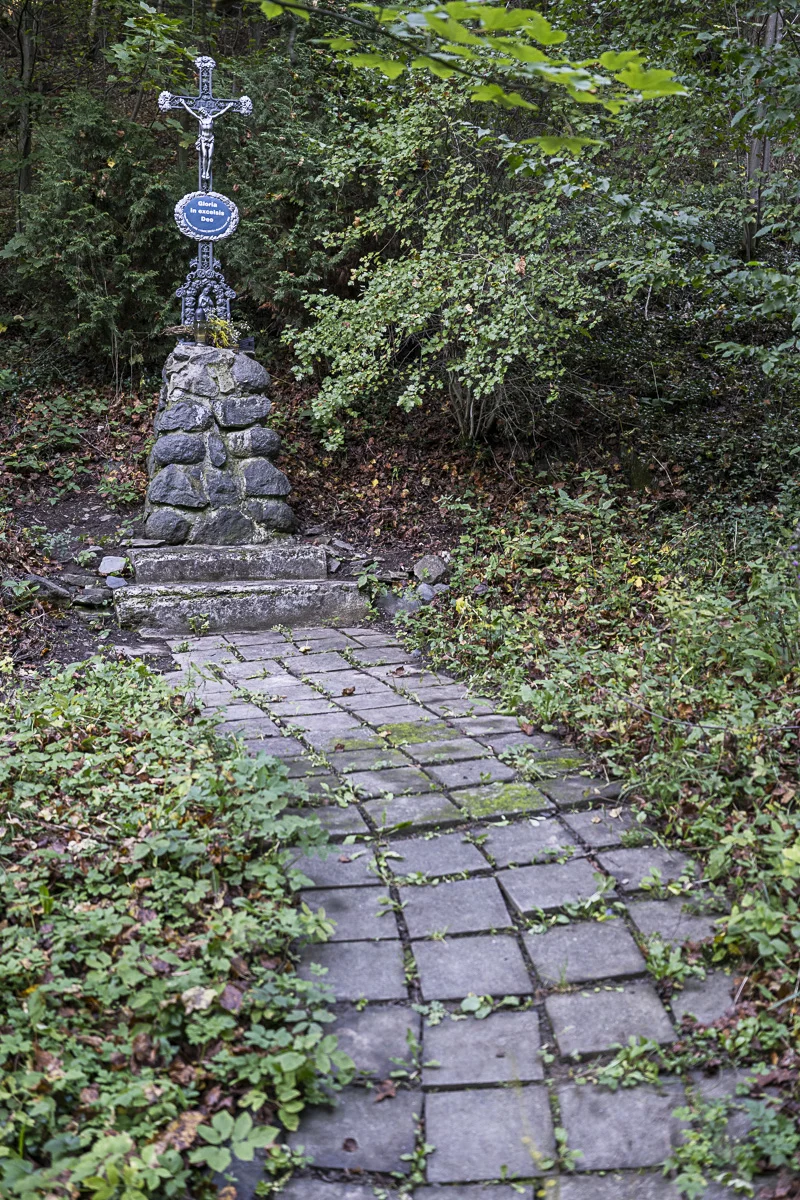
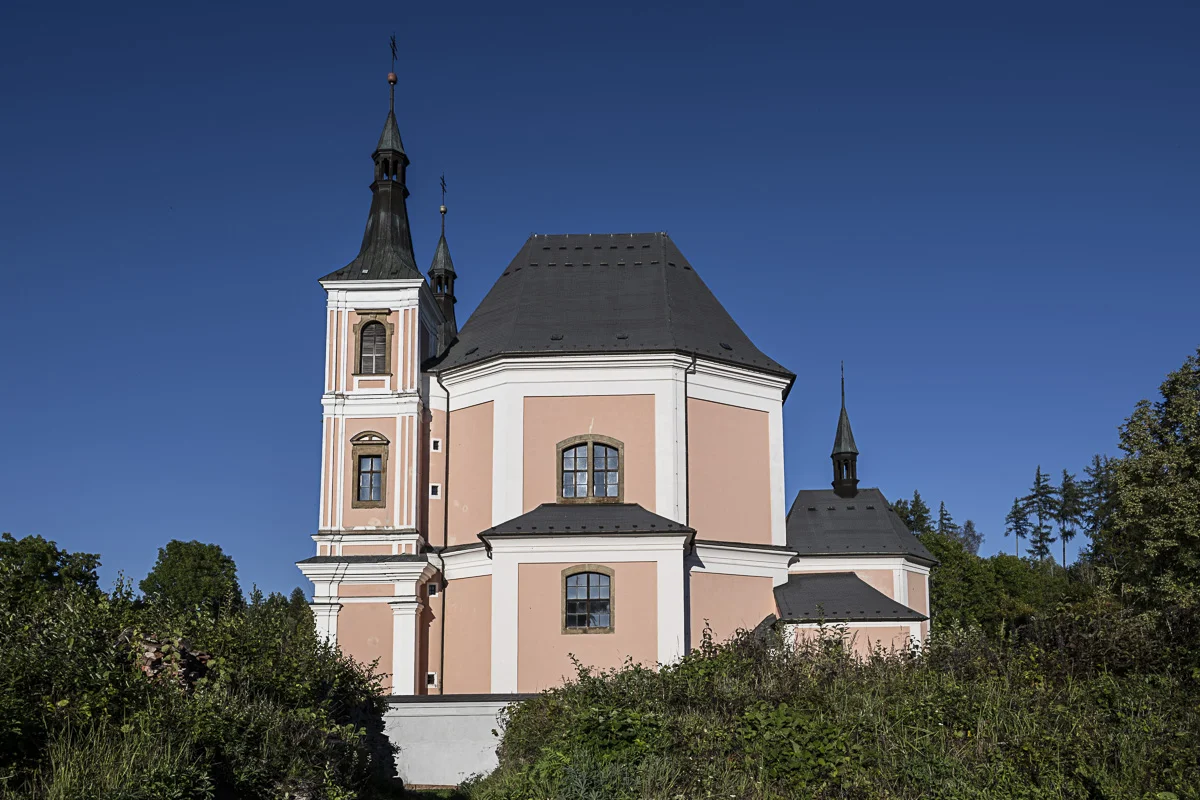
Stará Voda, Altwasser in German, had for centuries been an important pilgrimage site. Thousands of pilgrims flowed to the monumental church of St. Anne and St. James the Greater. Beside it stood the Piarist college, the ambulatories, farm buildings, and the houses of the village’s inhabitants. As late as the beginning of the twentieth century, the feast of St. Anne could bring several thousand people to the small village. Back then the church was not the dominant feature of an empty landscape, but the center of a living space.
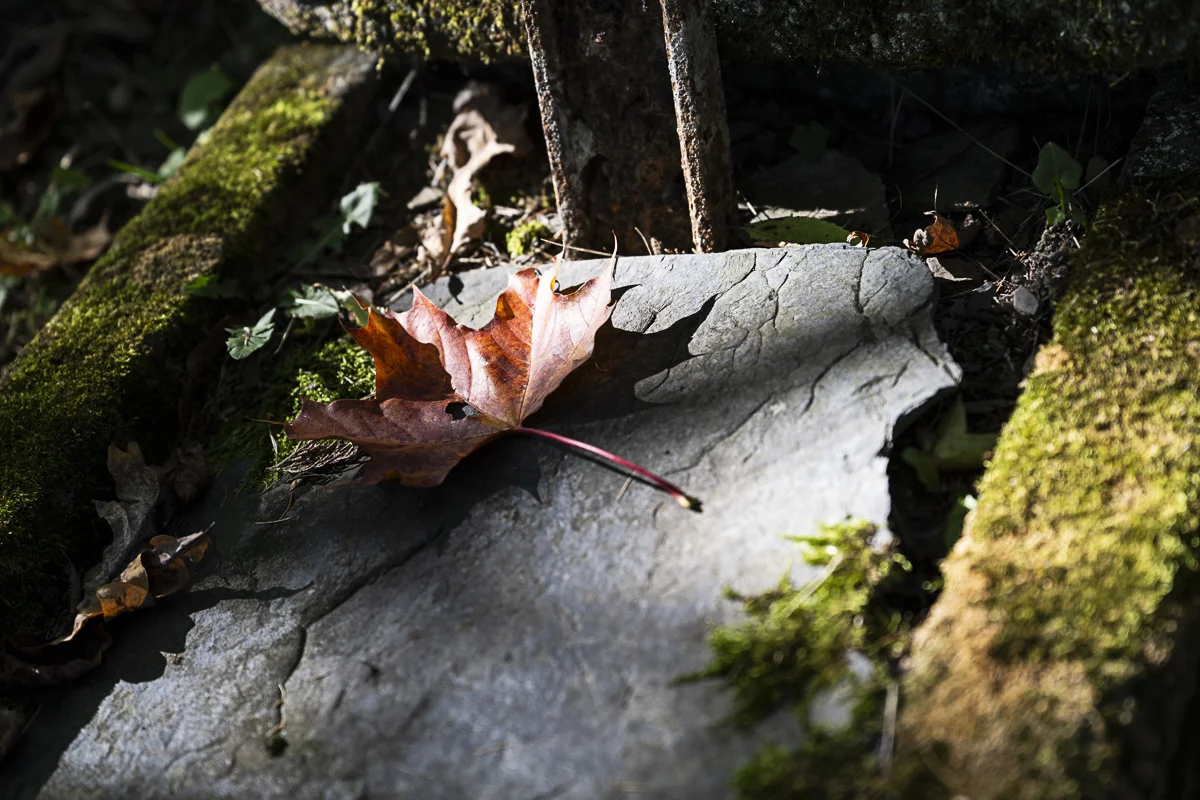
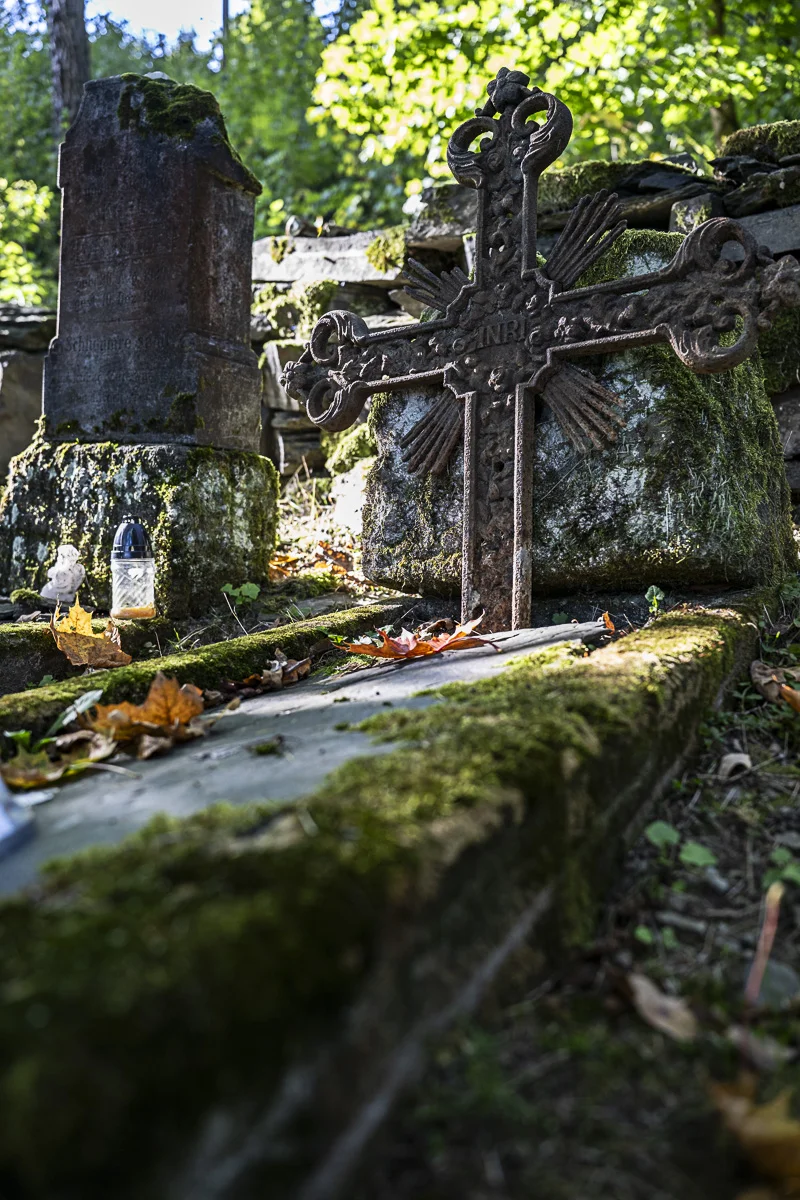
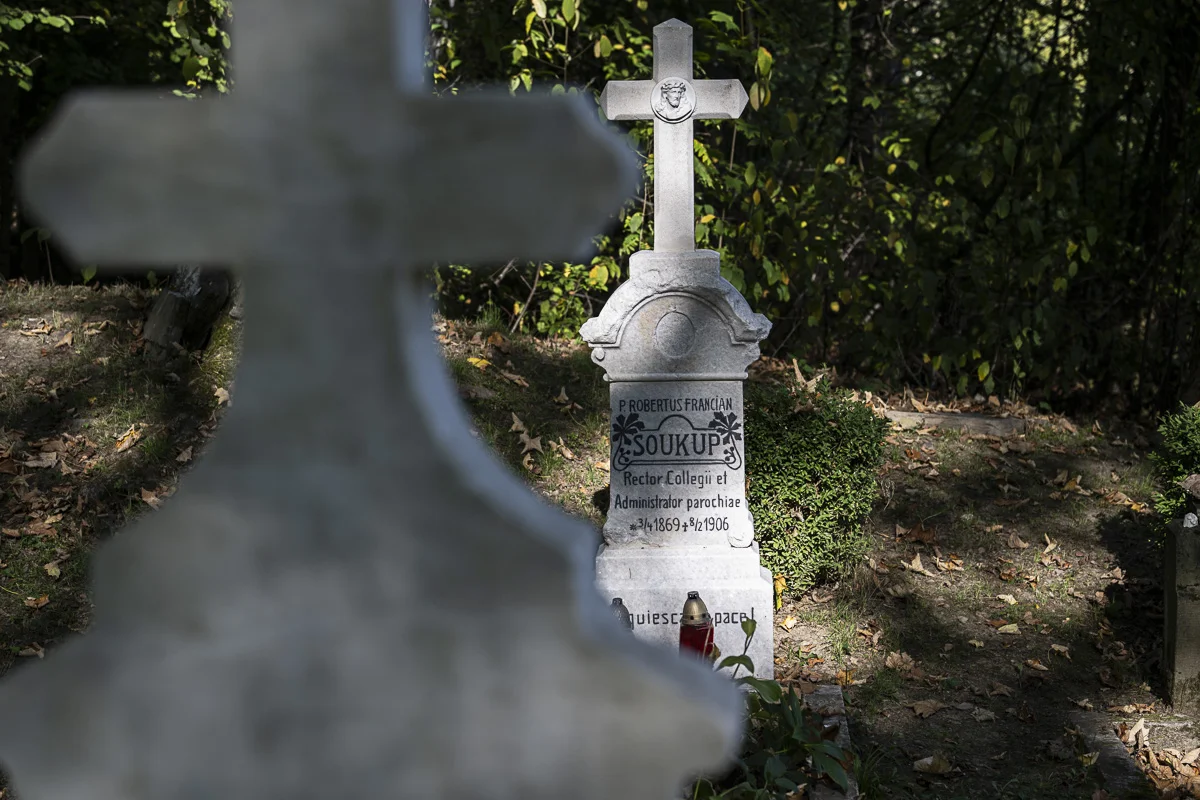
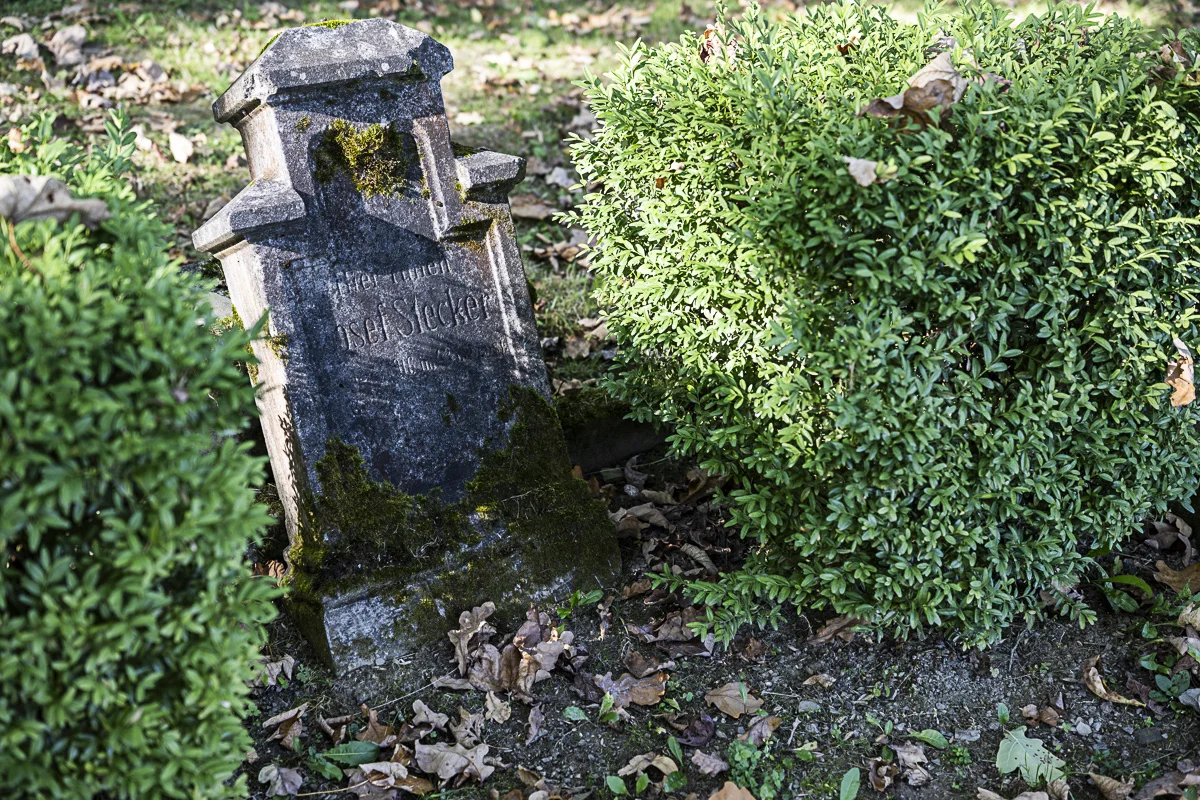
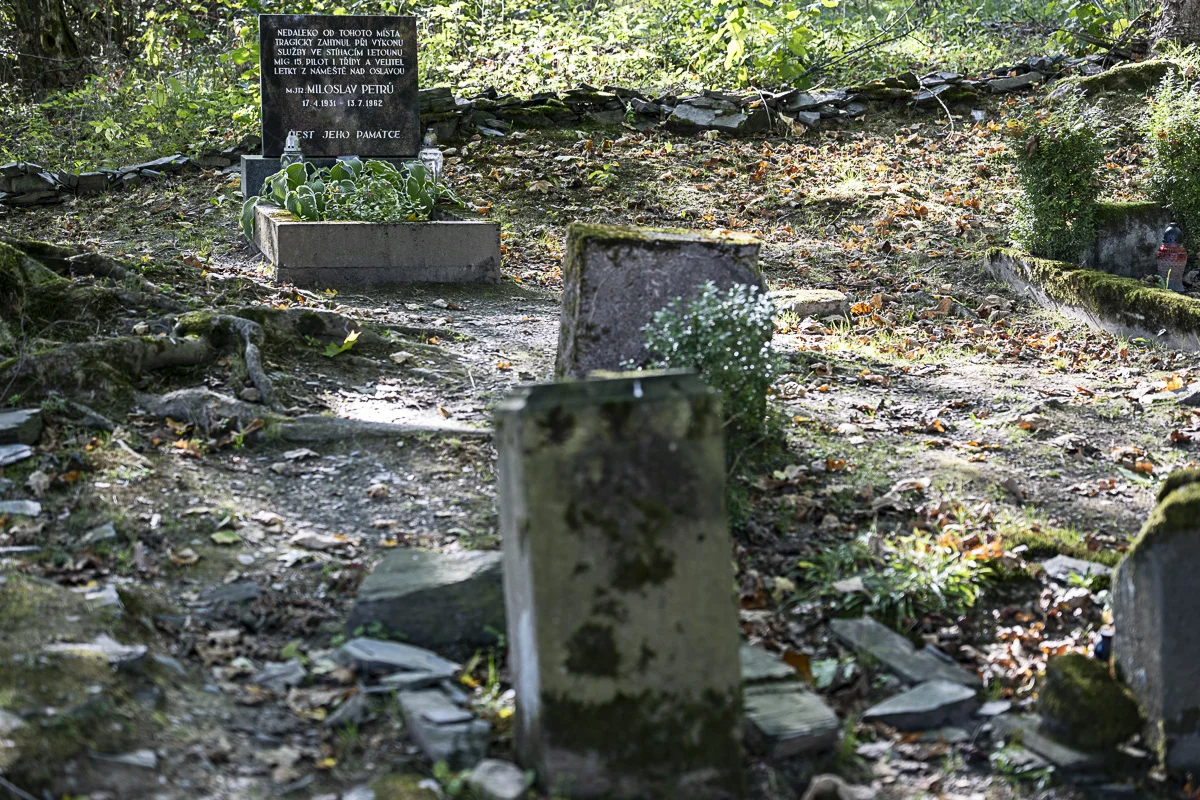
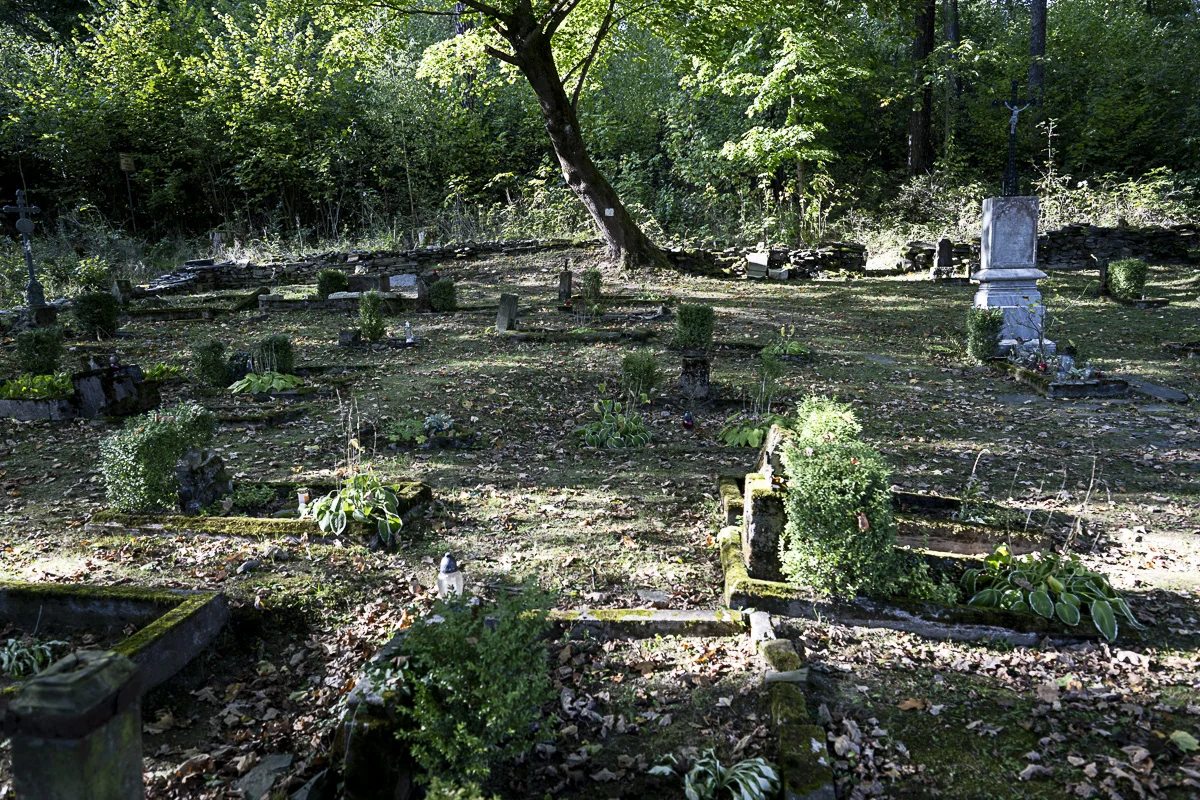
Today’s cemetery lies west of the church, on the slope along the former pilgrimage route to Město Libavá. It was founded in 1849. Before its creation, however, the burial ground was much more closely connected to the church itself. The cemetery surrounded the immediate vicinity of the church, and additional burial spaces were located beneath the ambulatory. Since the end of the seventeenth century, lay people and later also members of the Piarist order were laid to rest here. The dead were thus a physical part of the pilgrimage site, just like the living pilgrims who passed through the ambulatories above them.
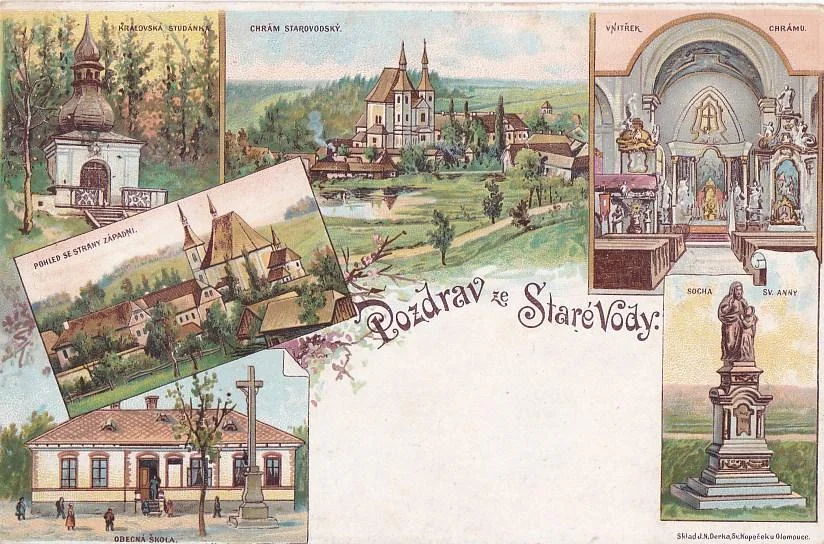
The year 1945 brought the first act of violence against this world. The monastery burned down at the end of the war, the church was looted, and the violence also touched the burial spaces. Even then, however, it had not yet been decided that Stará Voda would disappear. The following year the monastery was indeed being repaired. Masons and carpenters worked here, and there was a real possibility of its restoration. Then came the decision to use the landscape as a military area.
After the war, the German inhabitants were expelled. Later, the people who came after them had to leave the area as well. Stará Voda ceased to be a village. Houses were dismantled, sold as building material, or gradually demolished. Places of everyday life disappeared, and with them the continuity of people’s relationship to the landscape. In their place remained emptiness.
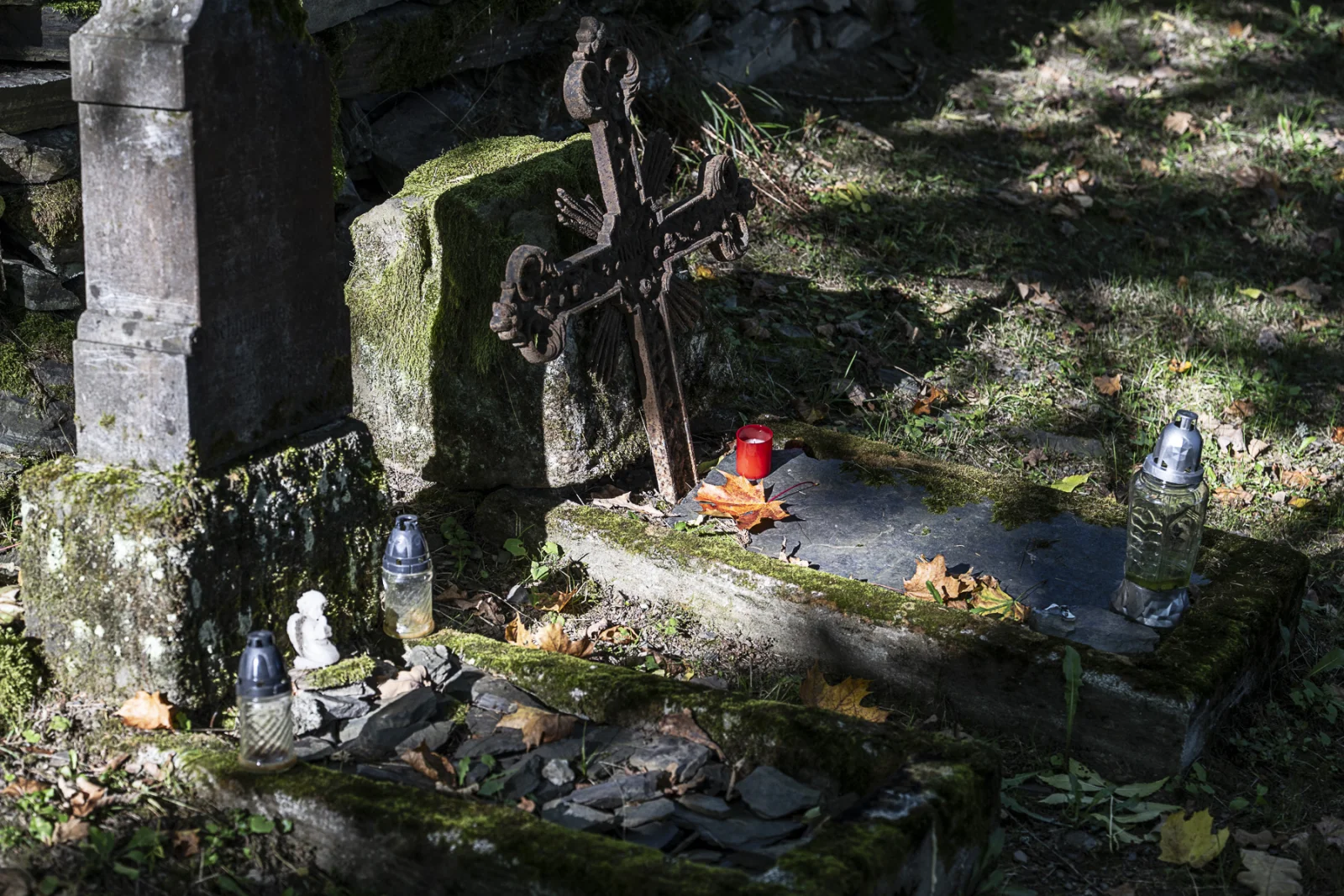
The cemetery, however, was not moved elsewhere. According to a report by the Office of the Government, the Stará Voda burial ground was not exhumed after the village ceased to exist. It remained in place while the traces of the living village gradually vanished above it. The gravestones decayed, became overgrown, and some of them were destroyed or disappeared. Only decades later did scouts from Velký Týnec begin cleaning and maintaining the cemetery.
Disappearance
The church’s current condition may create the impression that it began to decay immediately after the war and that its ruin was a natural consequence of abandonment. Archival materials show something different, however. As late as the early 1950s, repairs were still being considered. Even in the middle of the decade, a considerable amount of the original furnishings was still on site. Photographs from 1959 capture a damaged but still recognizable Baroque interior. A few years later, the picture is completely different.
It is precisely between these two states that one of the darkest chapters of Stará Voda lies. The floors are damaged, parts of the furnishings disappear, altars and statues are broken. Period reports also mention the use of explosives. For a time the church serves as an ammunition depot. By the mid-1960s, photographs already show the remains of statues and former furnishings thrown away from their original places.
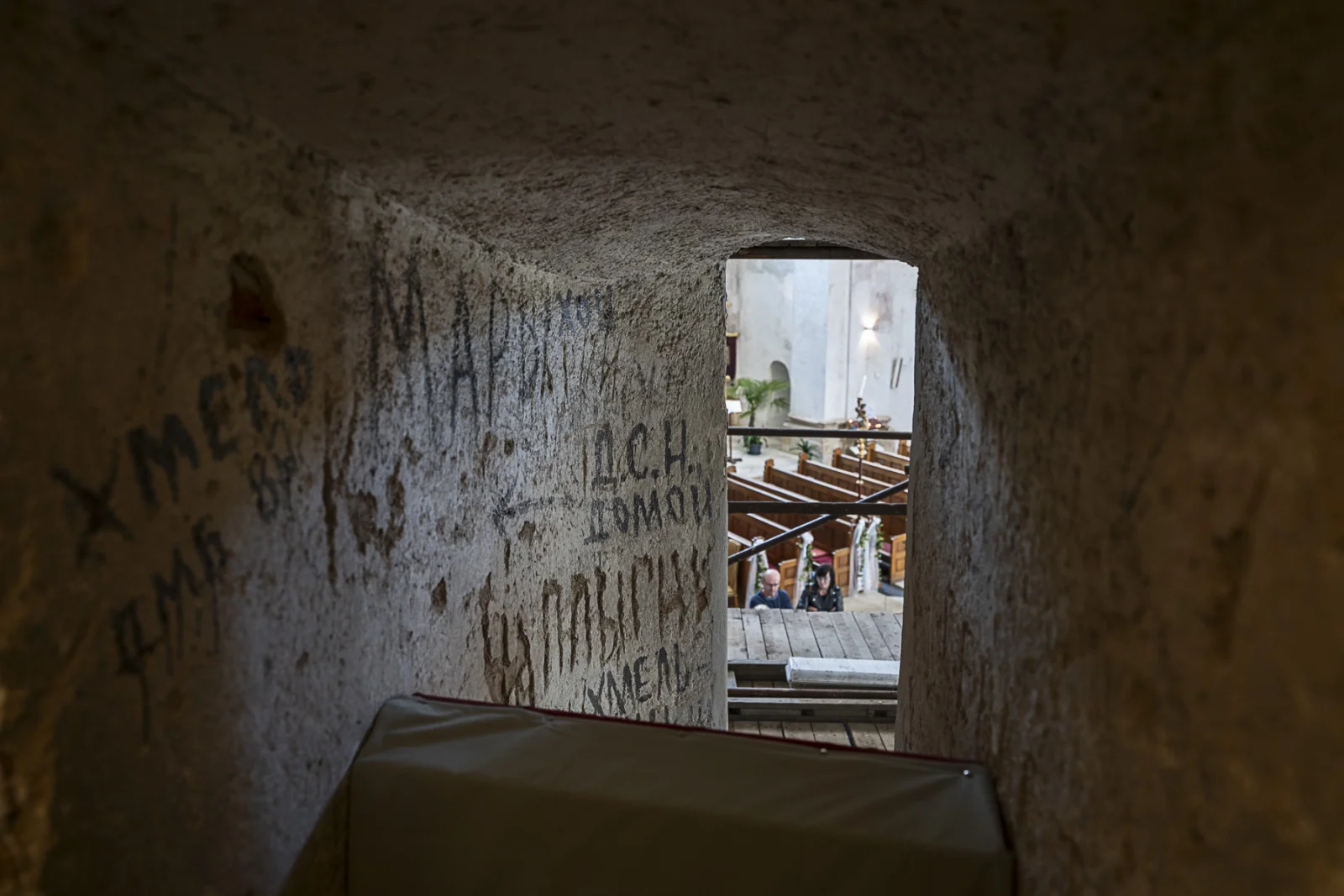
It is important to recall that a large part of this devastation took place before the arrival of Soviet troops after 1968. After their arrival, another layer emerged: inscriptions in Cyrillic, gunfire, and further damage. But it would be too simple to attribute the church’s entire condition solely to the Soviet army. The Czechoslovak military area had existed long before that, and the church was already badly damaged by then. Even the local overview of the history recalls that after it was taken over by the Czechoslovak army it was gradually plundered, and that the Soviet army after 1968 further deepened the devastation.
Beneath the church floor was the main Piarist crypt. That too was forcibly opened. There are several versions of what happened later, and individual testimonies cannot always be precisely placed in time.
Restoration
The turning point came only with the end of the 1980s and the withdrawal of the Soviet troops. The place, closed off for decades behind the boundary of the military zone, began to open again to people. In 1990, on the three-hundredth anniversary of the Piarists’ arrival in Stará Voda, the military administration prepared a plan for the church’s reconstruction. A year later, on September 28, 1991, the first renewed pilgrimage took place here after more than forty years. In 1992, the church repairs were already being financed by the Czechoslovak army. It was not yet the return of the vanished village, but for the first time in decades the place was no longer destined for use and destruction, but for rescue.
Yet at that time the church still stood in the middle of an almost impenetrable area. Jan Pečínka, who later became one of the most prominent figures in the restoration of Stará Voda, recalled the first scout expedition in 1994 with the words that they entered “into a jungle from which the two church towers stuck out.” The remains of the monastery and houses were hidden under self-seeded trees, the cemetery was overgrown, and only a ruin remained of the chapel above the Royal Well. From 1995 on, scouts began to come regularly. Gradually, other volunteers from the Czech Republic and abroad joined them. Over a quarter of a century, according to Pečínka, they worked here for approximately eighteen thousand hours.
They cut down self-seeded shrubs, carried away rubble, cleaned the cemetery, searched for the original stones beneath layers of earth, and maintained the monastery ruins and its garden. In the cemetery, gravestones that had almost disappeared into the vegetation rose into view again. Some were restored, and a central cross was erected. The pond behind the church was filled again, and the monument to the fallen of the First World War was restored. The place did not begin to return through a grand reconstruction, but through thousands of small interventions.
The Royal Well became the symbolic result of this work. From a chapel that had been practically destroyed, a new structure was created, and in 2007 it was consecrated. Alongside the scouts, German natives also took part in its restoration. There is a peculiar circle in this: the descendants of people who were forced to leave after the war began, together with people living on the Czech side, to reassemble the place that had almost disappeared after their departure.
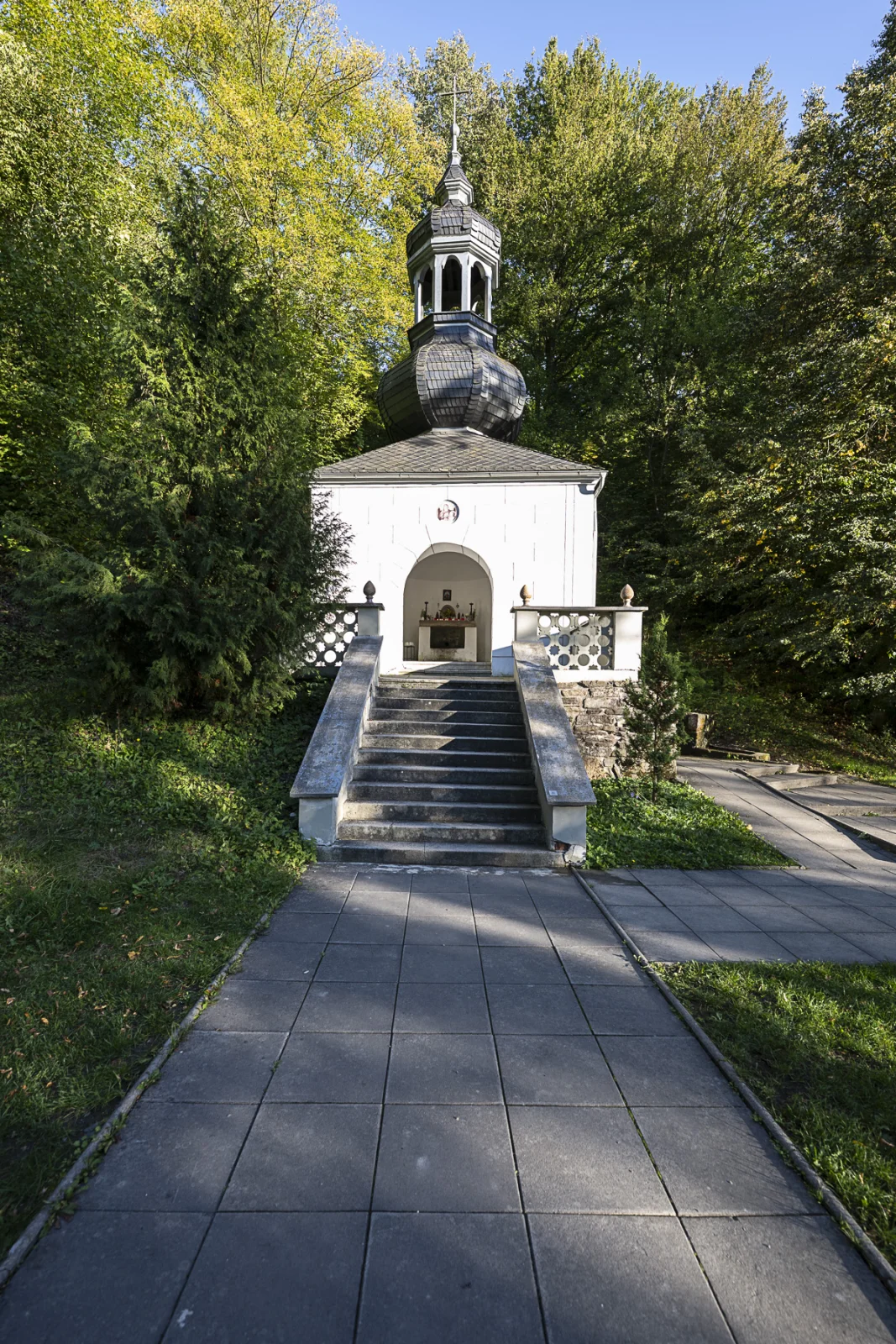
Other things gradually returned as well. In 2013 a replacement statuette of St. Anne was acquired in place of the original miraculous statuette, which has been missing since the 1950s. In 2016 Stará Voda, together with Město Libavá, was removed from the military training area and transferred to civilian administration. During the same period, work continued on the interior; for example, part of the work in 2016 was made possible by a collection from former German inhabitants.
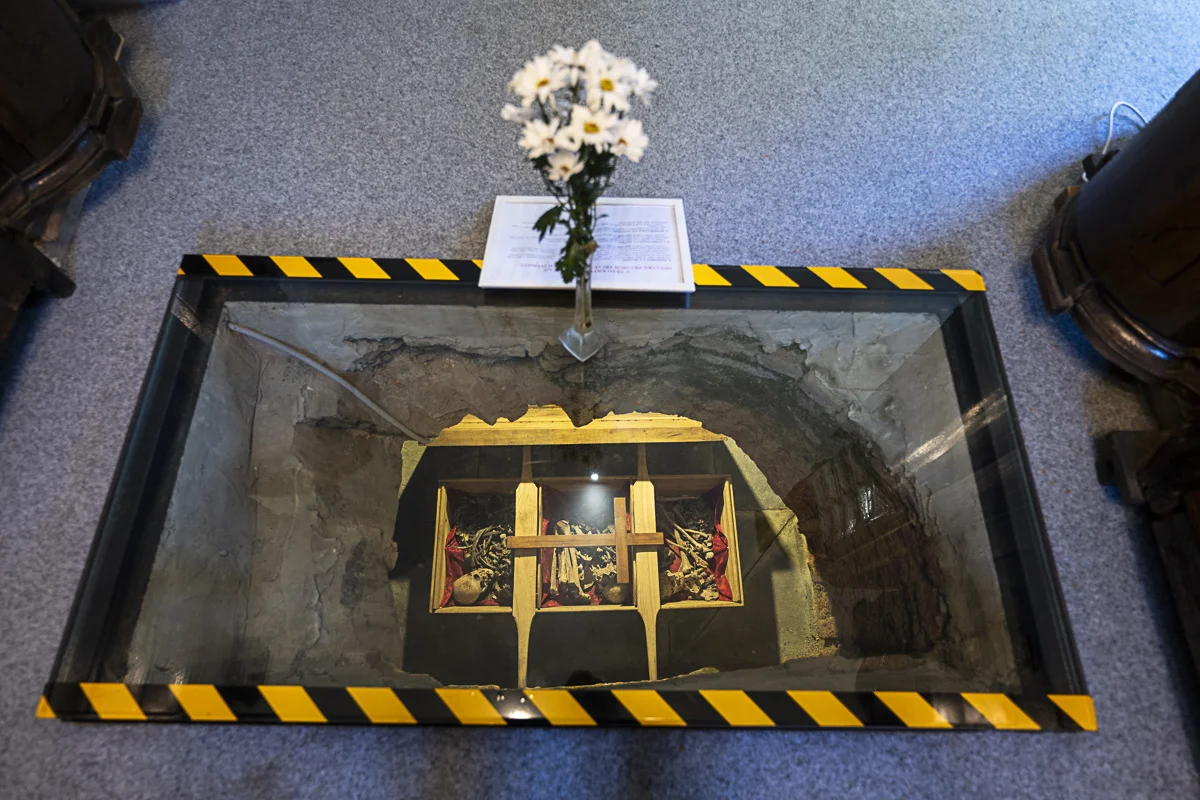
But the return was not only symbolic. In 2022 the church received a new main altar, transferred from the church in Dvorce. A year later, something far more personal returned to Stará Voda. During the archaeological survey in 1992, the remains of three Piarists were found in one of the crypts. For three decades they were kept in Brno’s Anthropos. In May 2023 they were ceremonially brought back and reinterred in the church.
It is precisely this return that, in connection with the Stará Voda cemetery, seems almost symbolic. After the war, the living were expelled from Stará Voda, while the dead remained. After decades, some of those who had left the place began to return at least through their descendants. And in the end, the three people buried here more than three centuries ago also returned home.
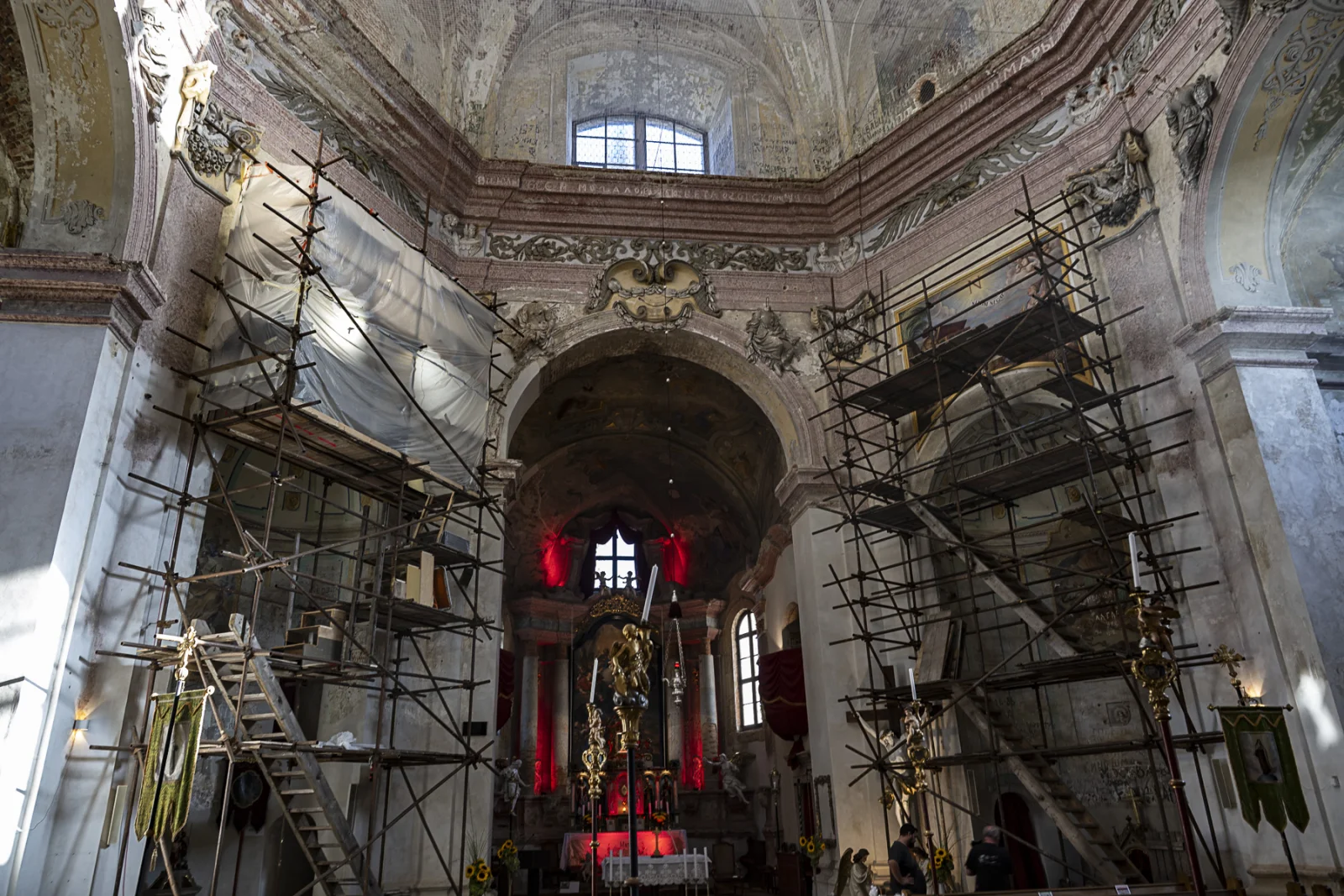
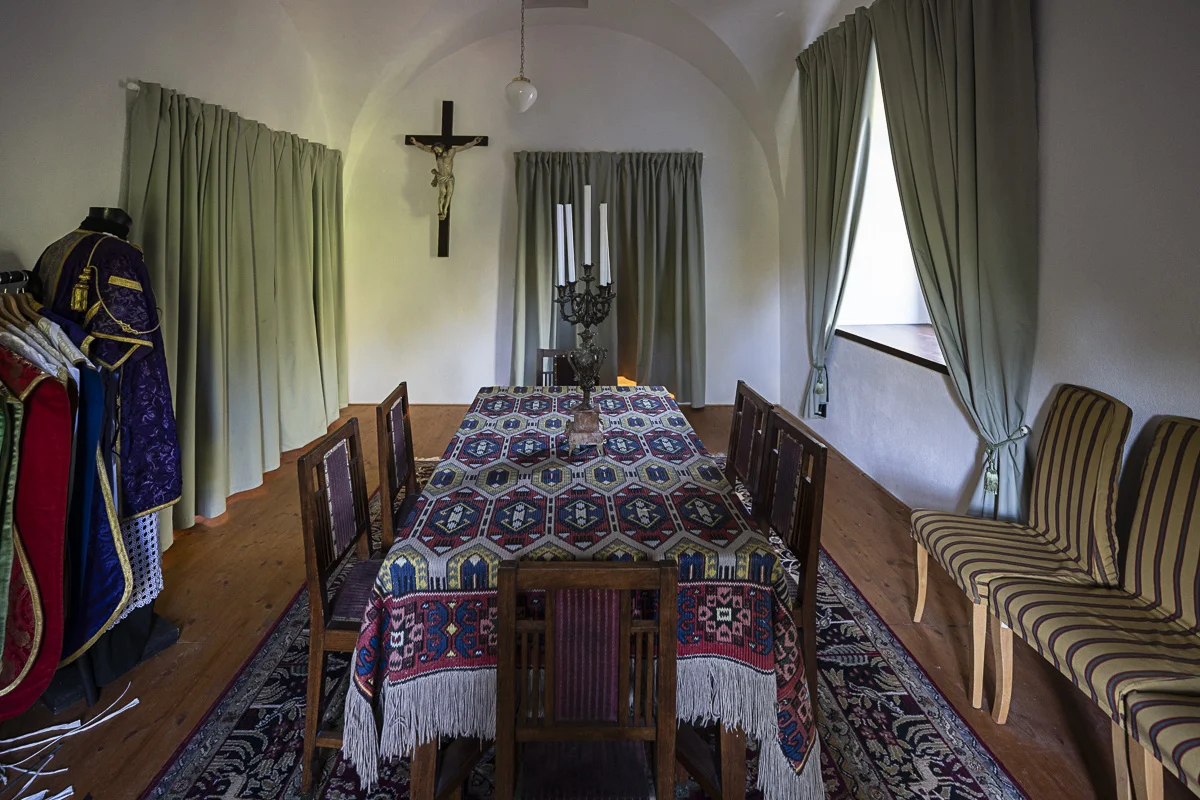
Since 2022, another, new layer of life has begun to form around the church. Aleš Jan Tománek became the site’s caretaker, and in 2024 the association Pilgrimage Site Stará Voda near Libavá was founded. Its aim is no longer merely to maintain the ruin, but to restore real life to the pilgrimage site. Masses, pilgrimages, and concerts are again held here regularly, the monastery garden is being cleaned, and systematic rescue of the most endangered parts of the church is being prepared.
In February 2025 the main Piarist crypt was reopened after almost a quarter of a century. This time not because of looting or violence, but so that the structure of the church could be assessed and its further restoration prepared. The place that in the past had been entered by force thus opened again as part of its own rescue.
Restoration does not mean erasing all traces of the past. On the contrary. One of the biggest current challenges is the rescue of the original frescoes by Giovanni Carlone from 1688. Their condition is critical. In 2026 two restored frescoes were presented to the public again, and seven new bells were added to Stará Voda. The original stone holy-water stoups from 1687 also returned to the church after sixty-nine years.
And right now, in the autumn of 2026, the story of rescue is entering another decisive phase. Inside the church, extensive wooden scaffolding is being erected, allowing access to the vault and ceiling several dozen meters above the ground. The structure will use approximately sixty-five cubic meters of spruce wood. The ceiling is in critical condition, and without securing it, restoration cannot continue.
Text © Lukáš Horký · Photography © Lukáš Horký