Journal · 2026-10-31
Branžež after Twenty-Five Years
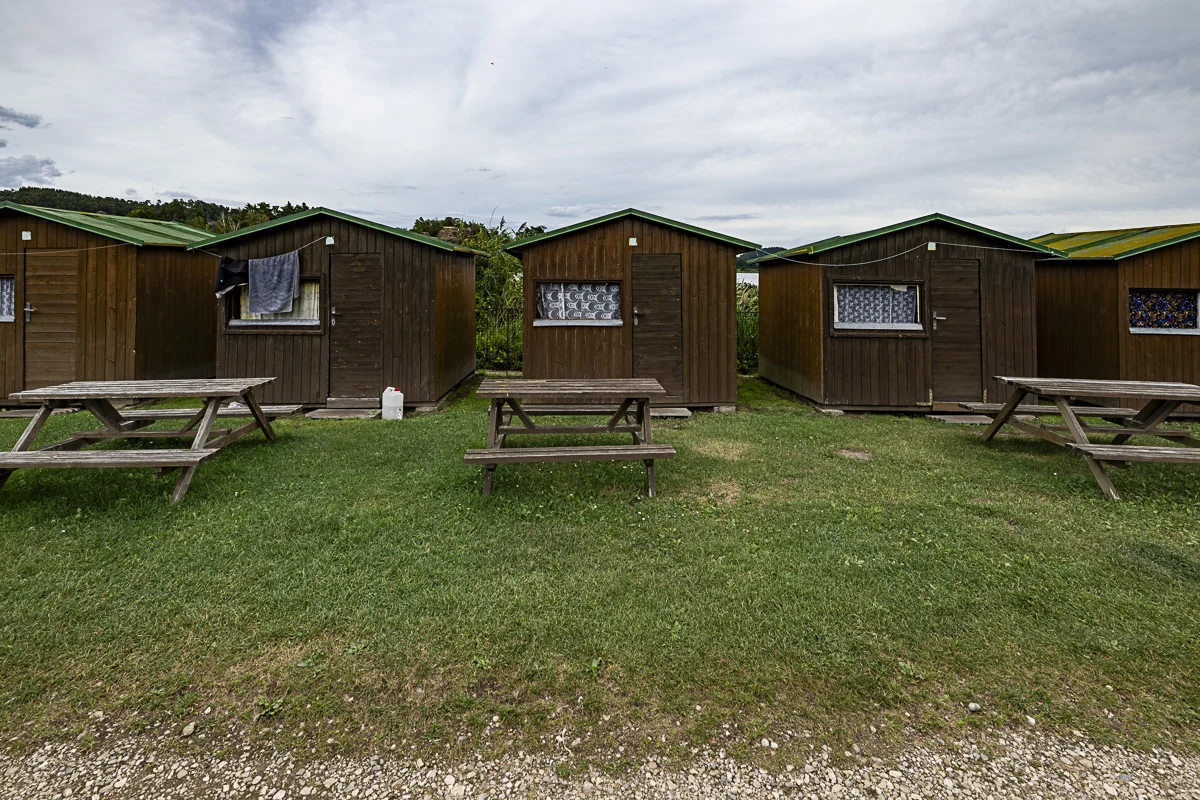
There are places we return to, even though we do not really know why. A part of our life has remained there, memories of people we once met. This summer I set out once again to the Branžež Komárovský Pond. To the places where I spent several unforgettable days in September 2001 during a student training course. This time I also headed to the opposite bank, to the Peklo campsite. With a camera and a distance of twenty-five years.
In September 2001 I stood on the bank of Komárovský Pond. It was raining. The last participants in the summer training course were heading home and I did not want to leave. A week was ending whose intensity set it apart from ordinary student life. I was twenty-two, studying computer science at Masaryk University, and I had only just started photographing.
I was left with negatives, several dozen photographs, and texts I wrote shortly after they were developed. They are somewhat sentimental, at times naive, but to this day I can feel the mood of that time in them. Friendship, freedom, carefreeness, and the uncertainty that at twenty-two one often mistakes for great insight into life.
Komárovský Pond lies beneath the wooded slopes of the Příhrazské Rocks. Its history goes back at least to the beginning of the seventeenth century, when it was part of a larger pond system on the Kněžmostka. The original body of water was considerably smaller than it is today. Even on historical postcards from the beginning of the twentieth century, we see a landscape that we would hardly recognize now. The pond was surrounded by meadows, wetlands, and rural homesteads. Only later did it become one of the centers of recreation in Bohemian Paradise.
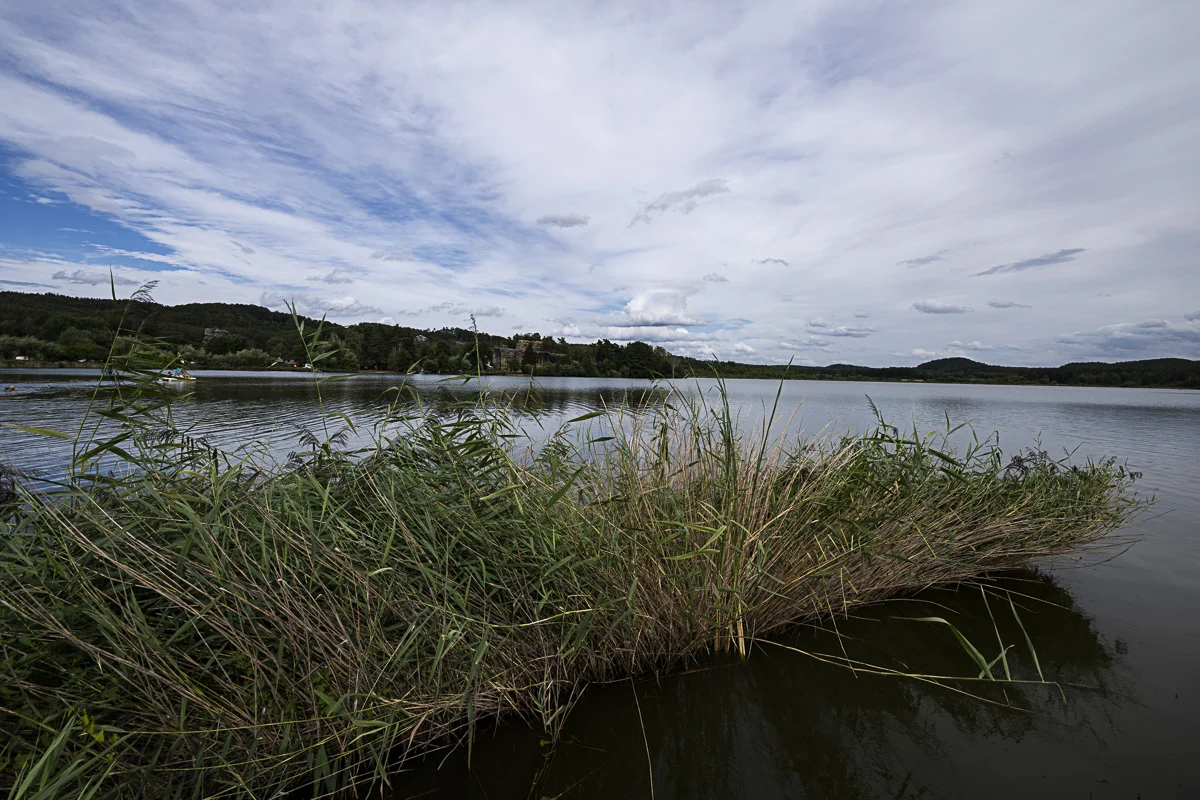
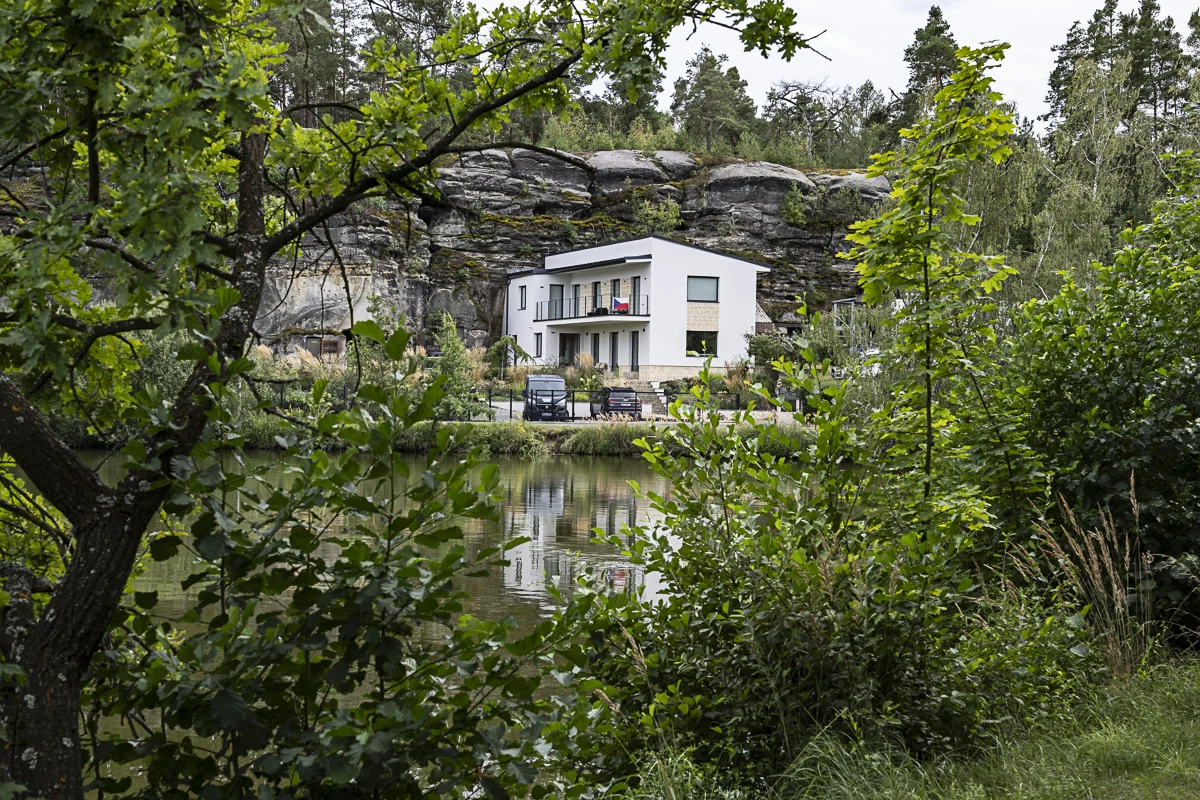
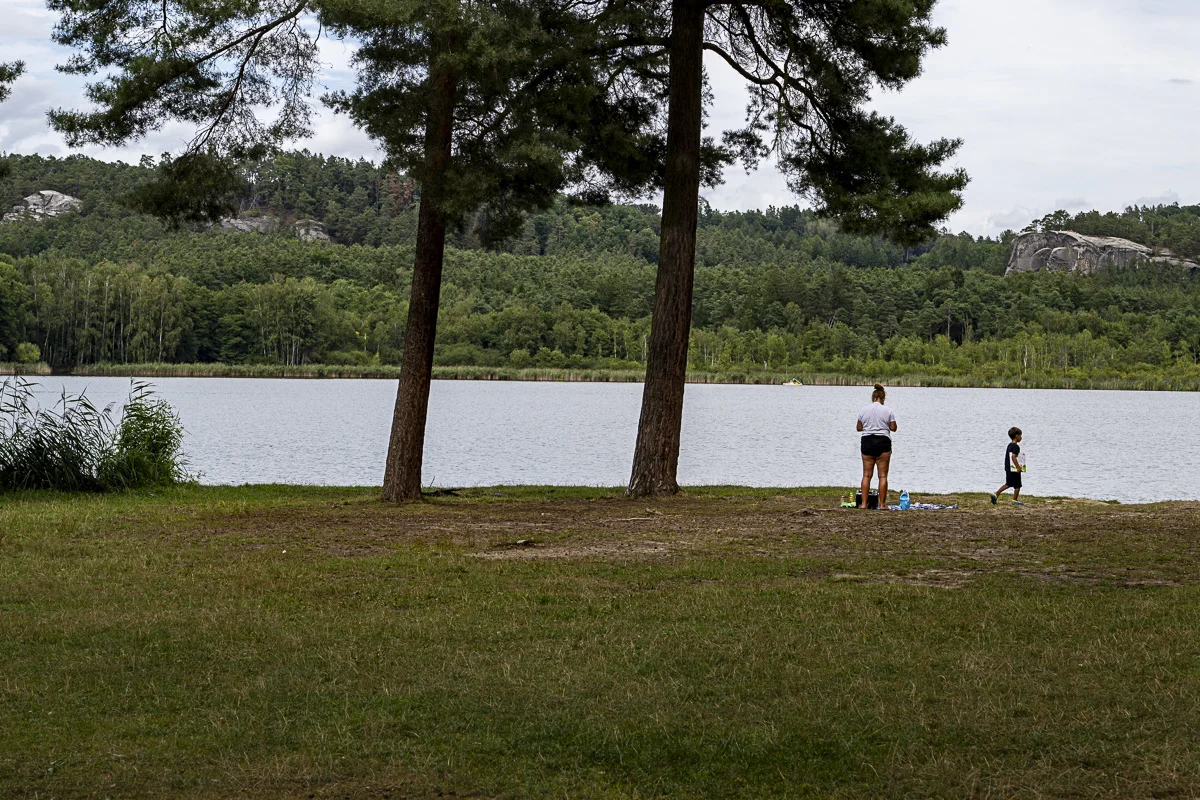
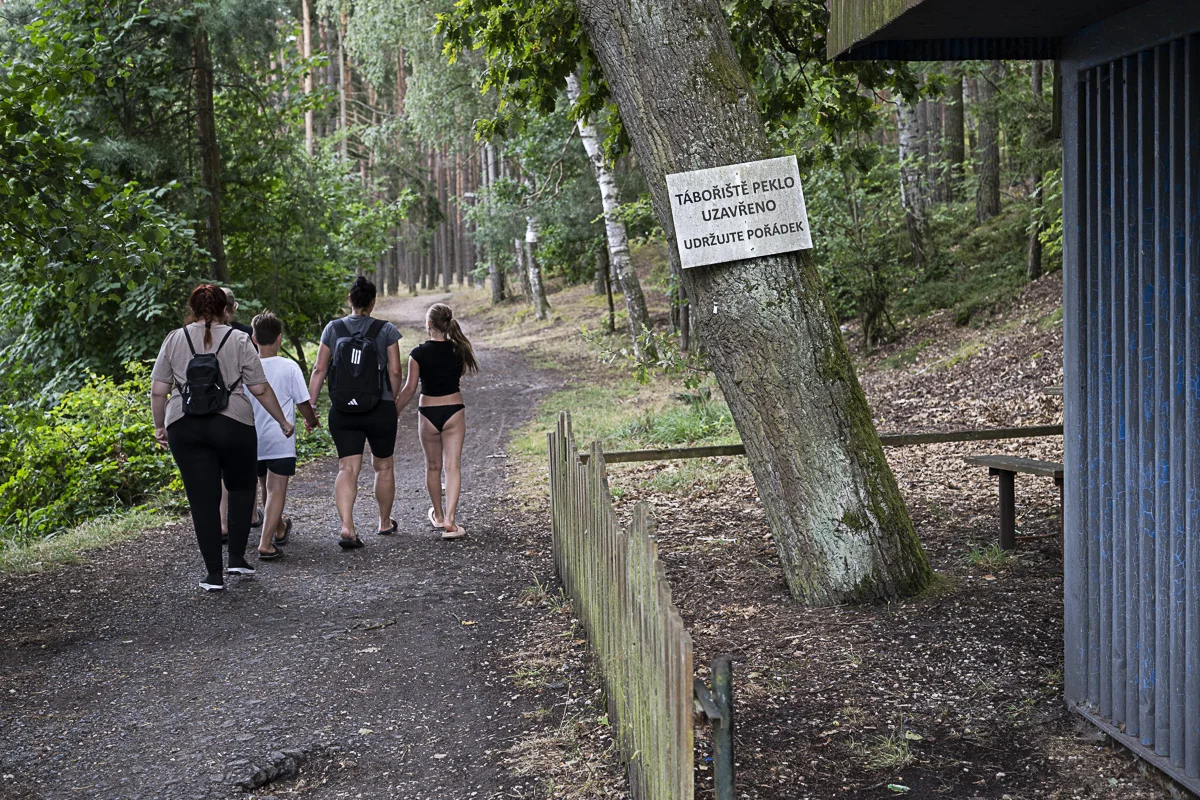
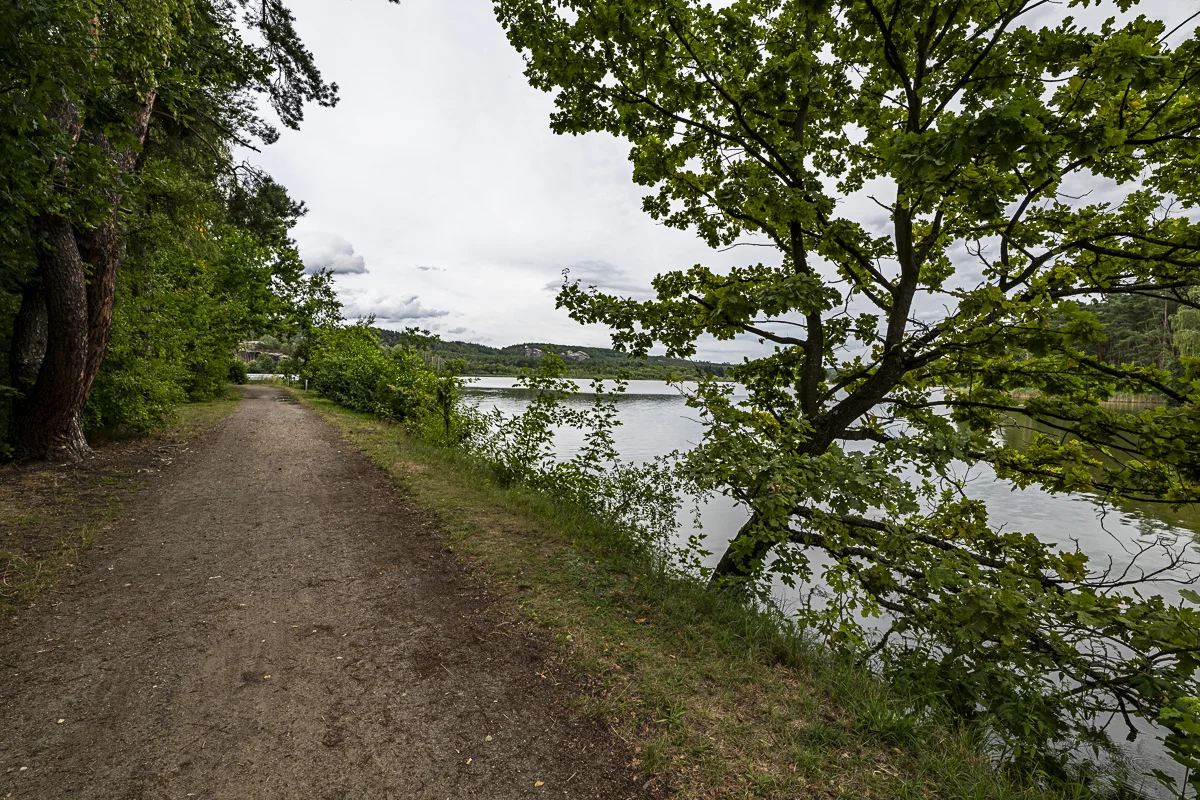
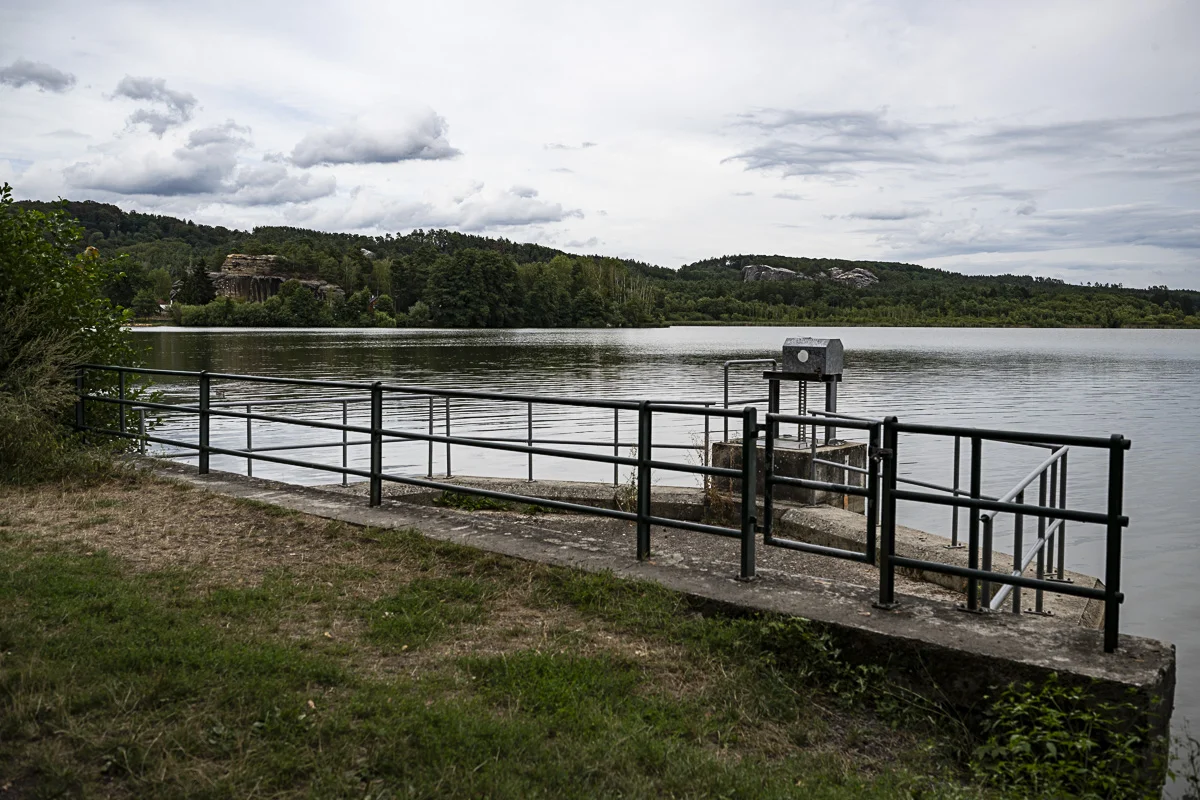
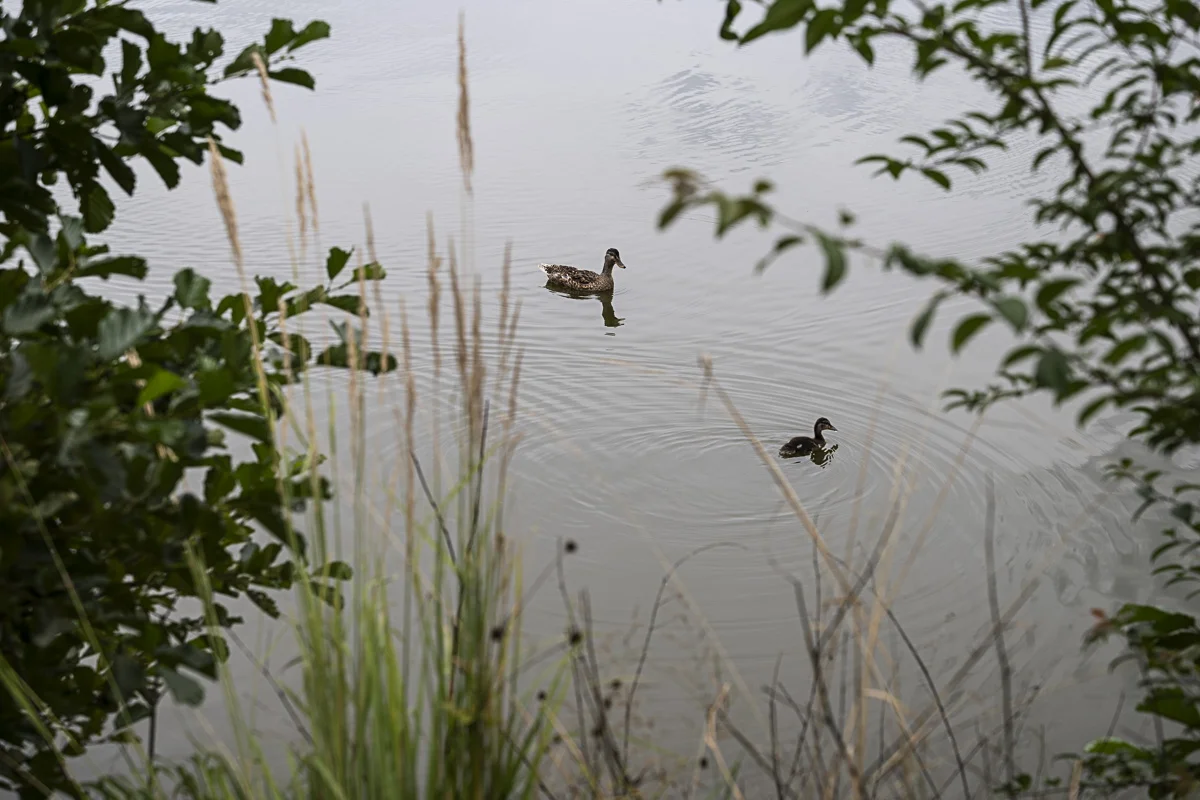
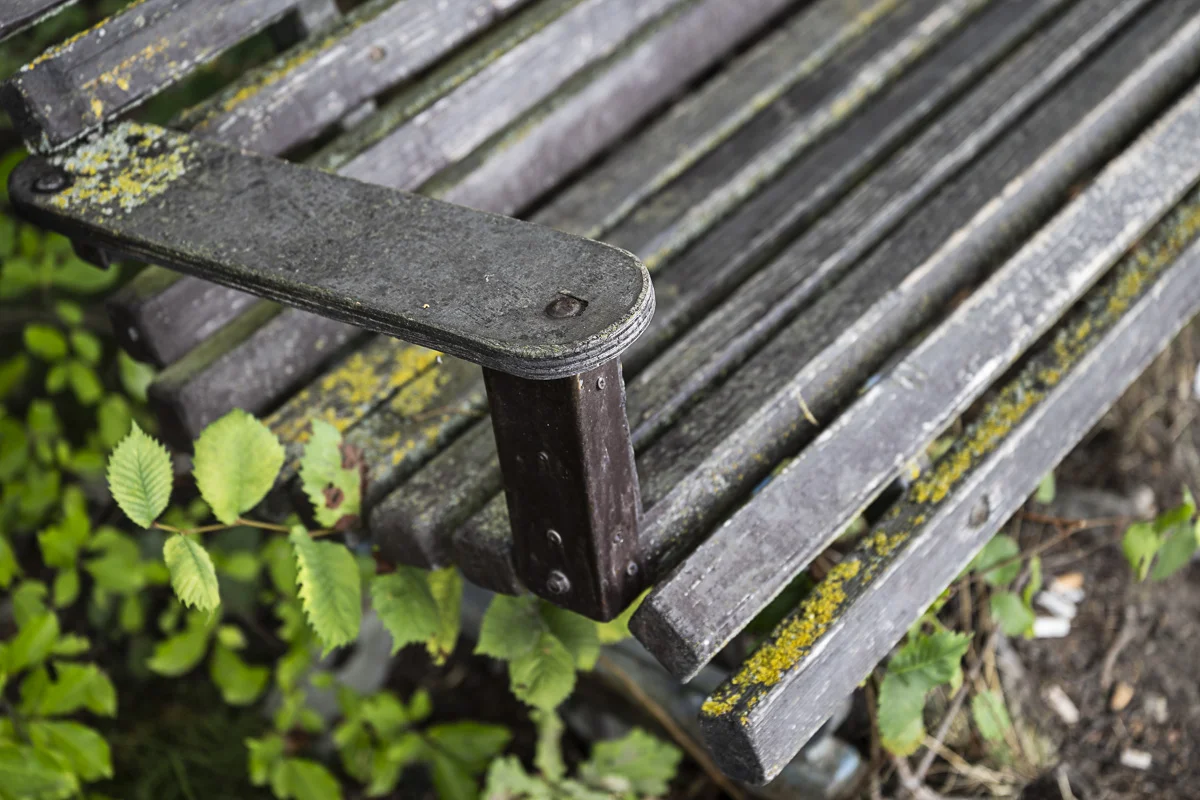
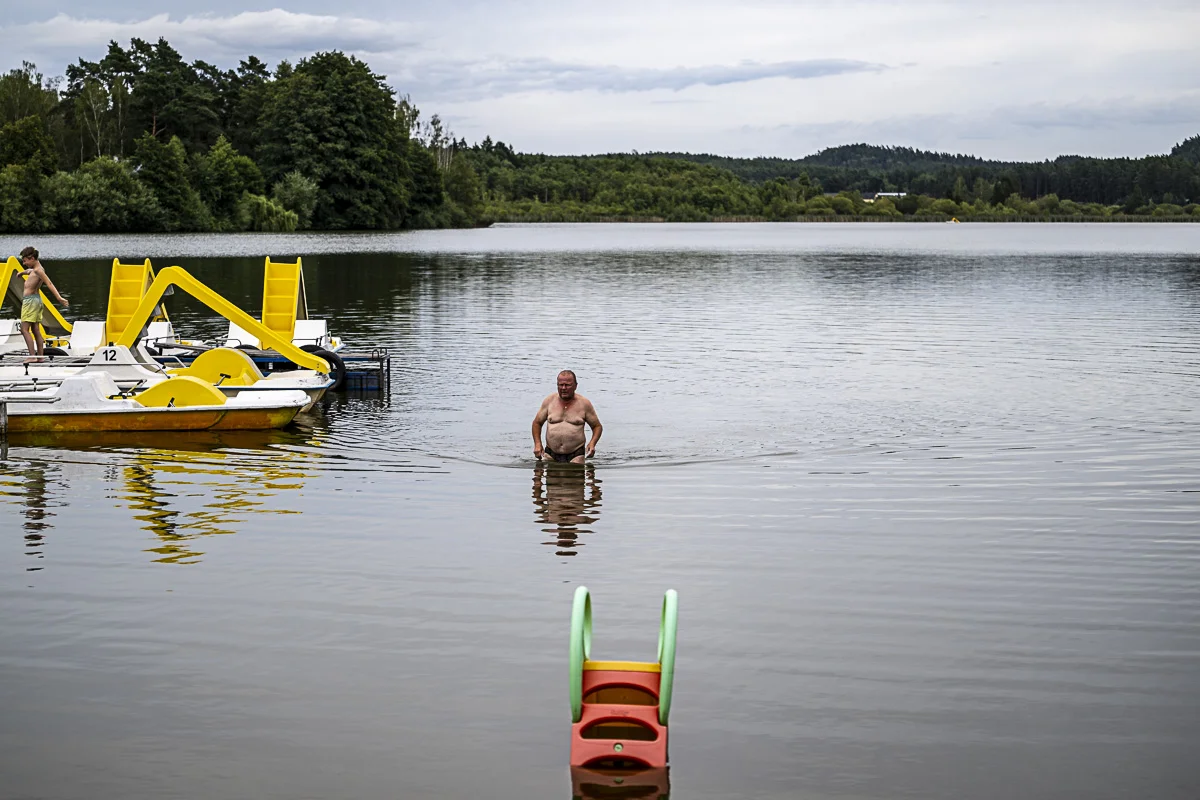
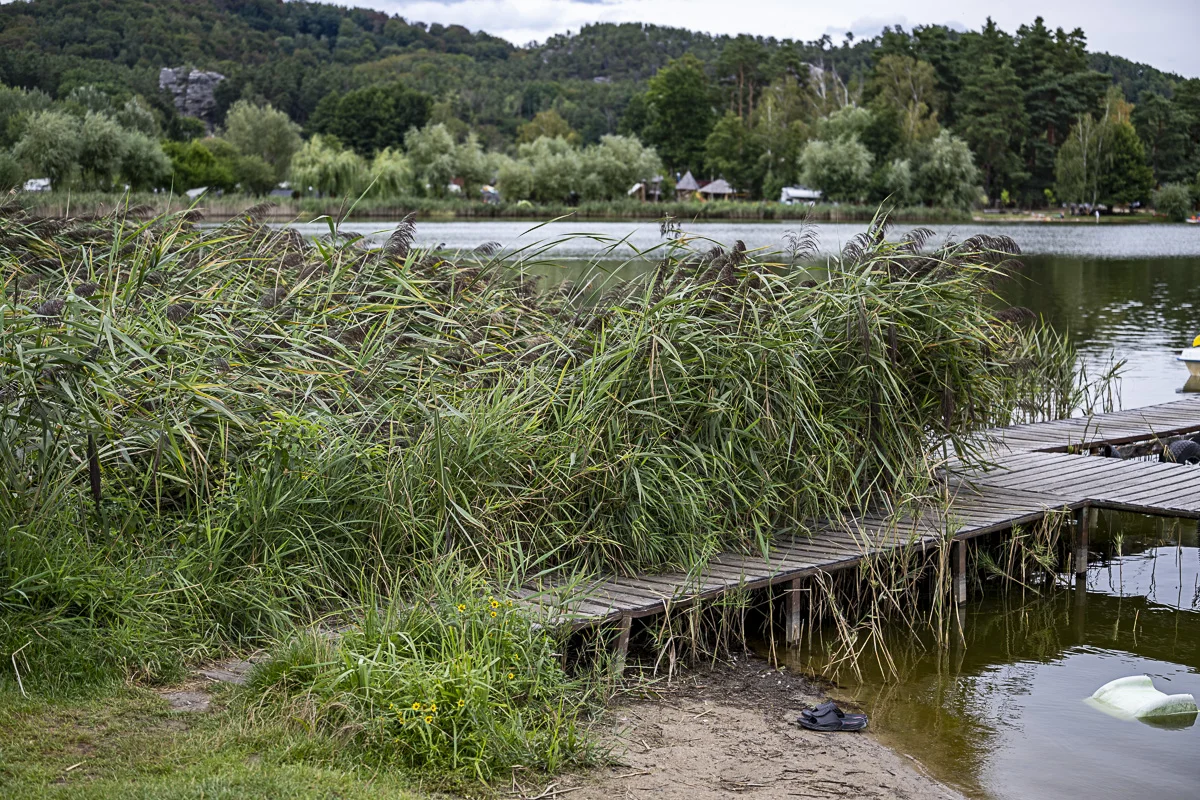
On one side of the pond, this story continues almost unchanged. Wooden cabins stand by the water, pedal boats wait on the grass, and a few visitors are swimming. Recreational buildings are visible between the trees, and sandstone cliffs rise in the background. Children are discovering the same world their parents and grandparents discovered here decades ago. Summer holidays have their own time, as if refusing to submit to the ordinary calendar. But on the opposite bank, the atmosphere changes.
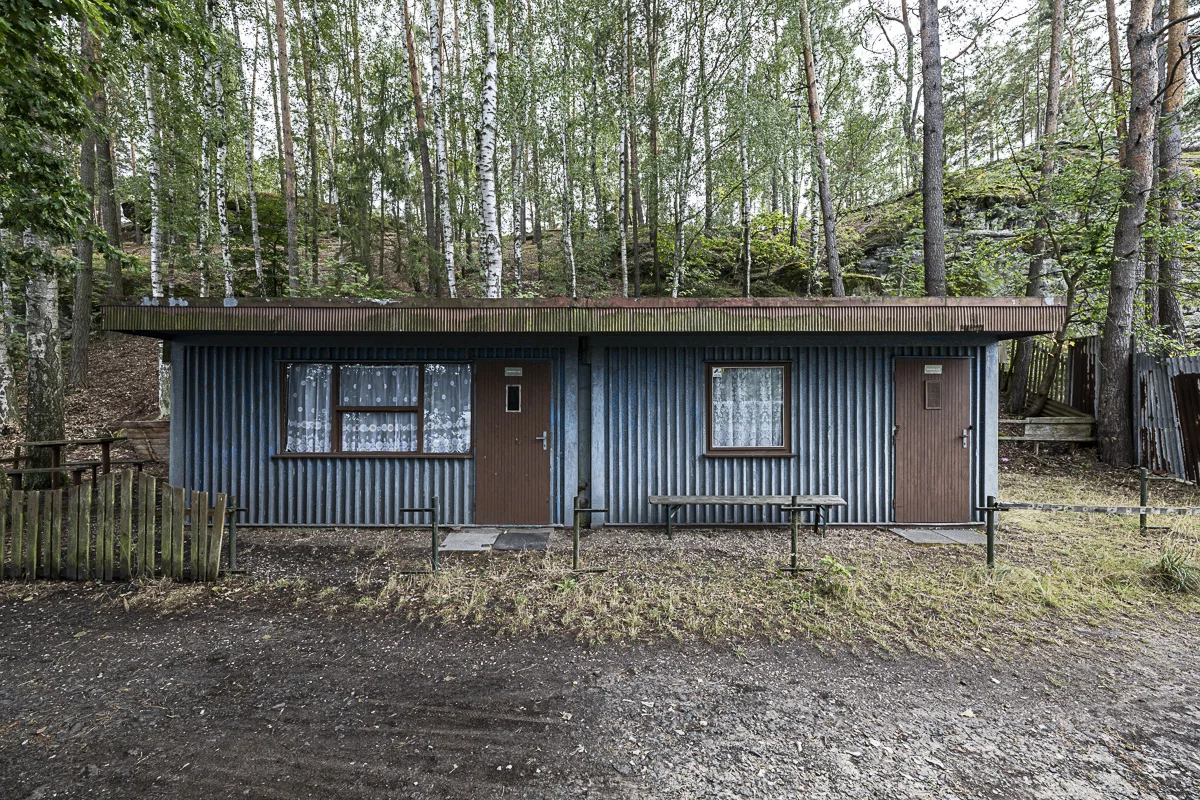
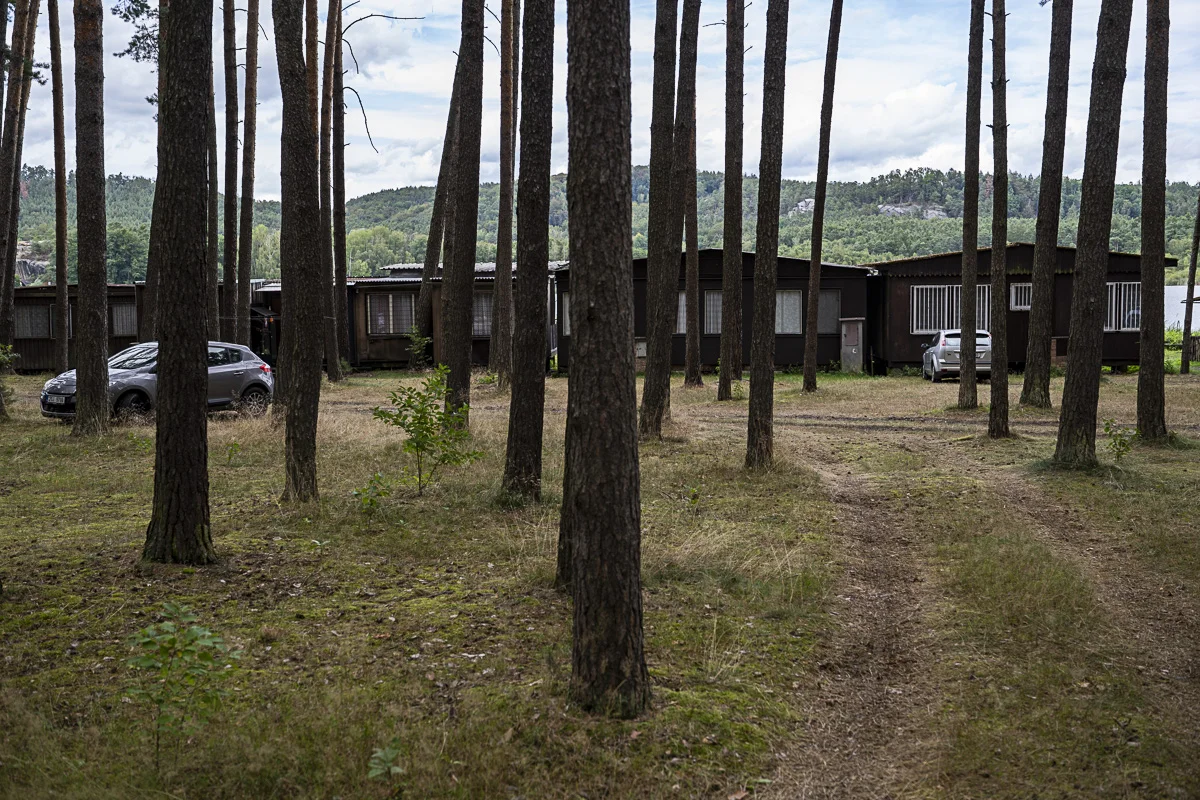
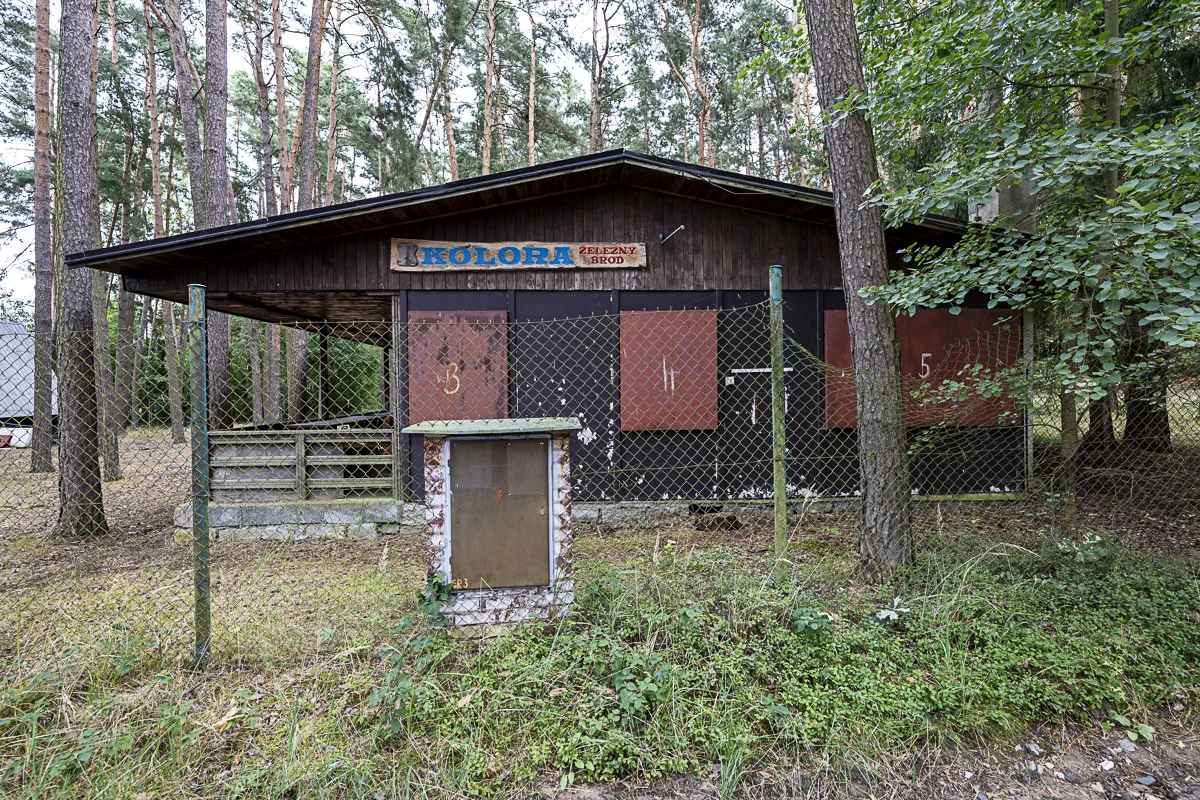
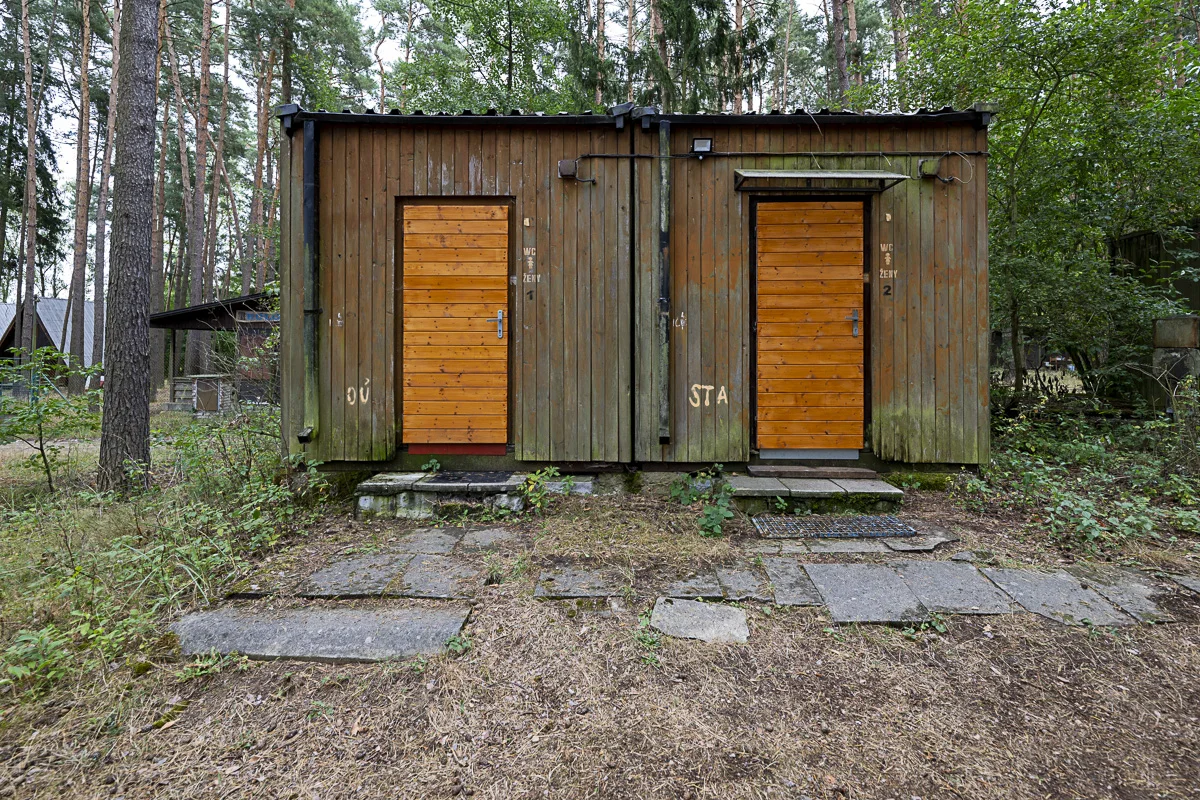
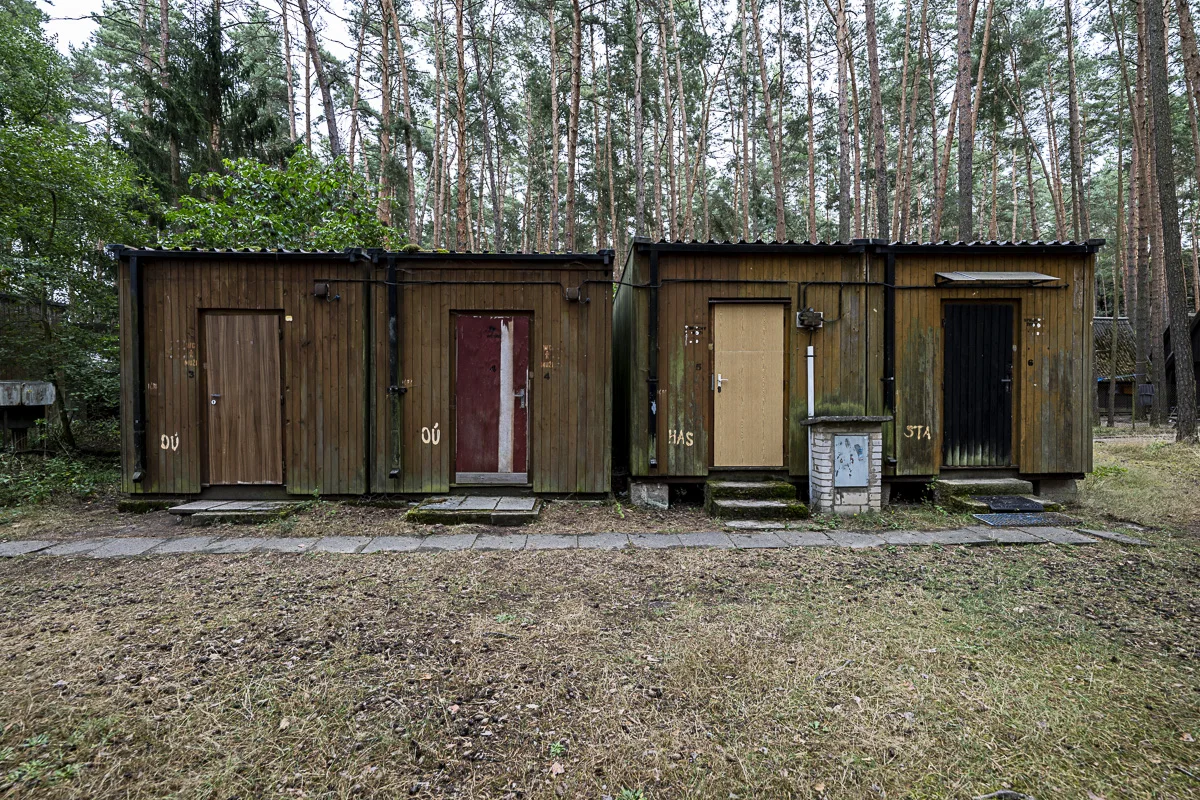
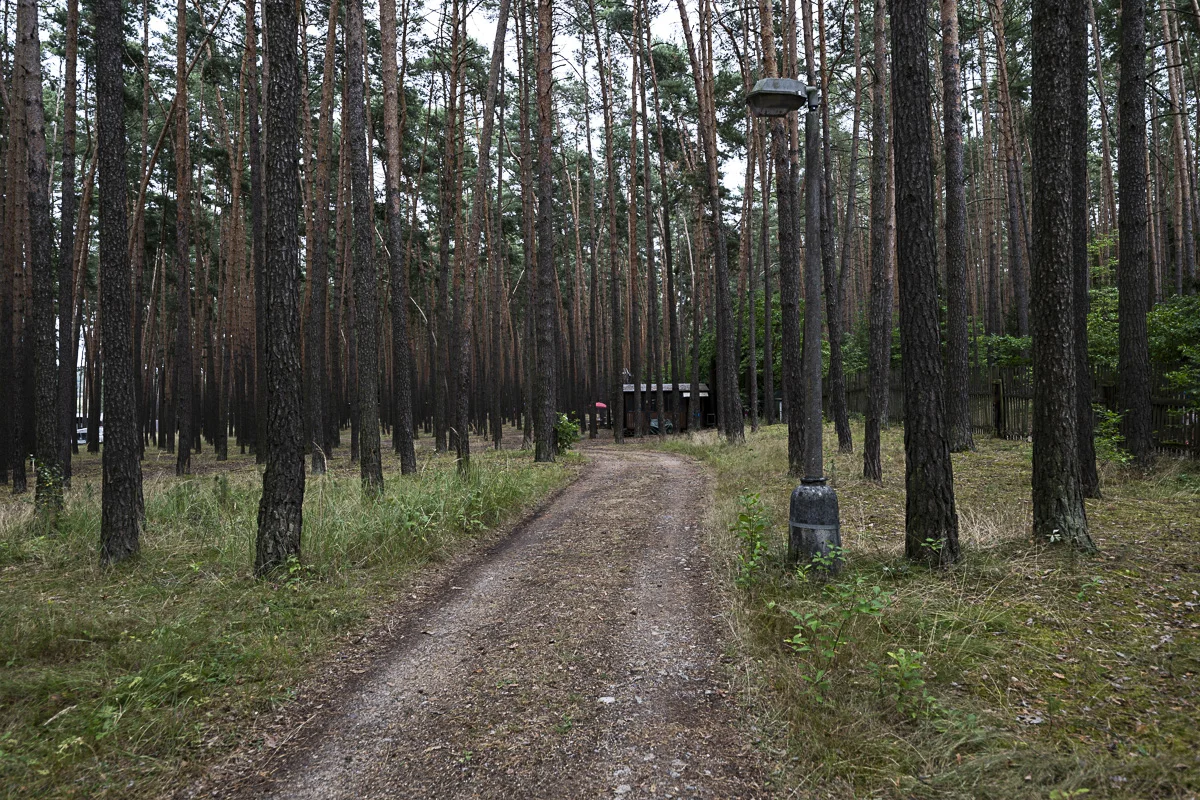
The Peklo campsite lies in a pine forest, whose regular rhythm of trunks creates an almost architectural space. Between the trees appear simple wooden structures, old cabins, and the facilities of a former recreational operation. The doors are closed, the windows are covered with bars. Nearby stands a row of small wooden toilets with differently painted doors. Concrete paths have remained in front of them. The strict regularity is disturbed only by the surrounding vegetation.
What always drew me to places like this was their ordinariness. Unassuming buildings, paths among the trees, places intended for a few weeks of the year. Czech campsites have a special ability to preserve the atmosphere of past decades. Although their equipment, the way people travel, and visitors’ expectations change, some principles remain the same. The proximity of strangers, limited privacy, and the everyday rhythm governed by the weather. A peculiar community forms here, one that disappears after a few days only to be replaced by another.
When I left the training course in 2001, I had the feeling that something important was ending. The people I had spent several intense days with were heading to different places, and I could not imagine how quickly our paths might part. Back then it seemed important to preserve every moment. I photographed with the awareness that something unrepeatable was being lost.
For the last photo I noted then that it was time to get moving. It was Saturday, September 8, and we were saying goodbye to Branžež. In the meantime, much has changed. Some friendships endured, others faded away, just like memories of events that then seemed unforgettable. But Komárovský Pond remained here, surrounded by forests in which the stories of further generations continue to settle. Some places do not need to be visited for years in order to remain part of our lives.
Text © Lukáš Horký · Photography © Lukáš Horký